
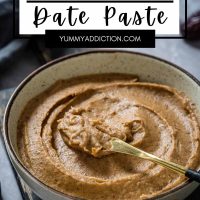
Try this easy but effective date paste in your cooking and baking for a versatile, flavorful, natural alternative to processed sweeteners. The long-lasting homemade paste takes just two simple steps and 30 minutes to make.

I was immediately hooked when I learned I could use regular dried dates as a healthier, natural sugar substitute in my baked goods. Dates bring a delicious fruitiness to every recipe and guarantee a moist cake.
Making them into that versatile paste is easy, too. It only takes 30 minutes, then lasts for weeks in the fridge and even longer in the freezer. It’s the perfect solution for anyone looking to replace refined sugar in their cooking.

Why Dates?
Dates are very healthy; you might even call them a secret superfood. Each little dried fruit contains magnesium, potassium, fiber, vitamin B, and tons of antioxidants. Plus, it’s a natural sweetener, unlike the heavily refined white sugar we’re so used to using.
It can actually replace refined sugar one-to-one in many different types of cooking, even baked goods.
And, since it contains fiber, it packs added benefits that other natural sweeteners like honey and maple syrup don’t. It’s an excellent option for vegans or anyone who wants to boost the nutrition in their baking.

Date Varieties
Nowadays, grocery stores sell several varieties of dried dates. Here’s some quick info on the more common ones so you know exactly which ones to pick.
- Medjool – The maple-like flavor, juicy texture (even when dried), and wide availability make these large dates popular for cooking and baking.
- Deglet Noor – These smaller dates are commonly sold pre-pitted and have a sweet but nuttier flavor than Medjool. They’re great for baking, snacking, and savory cooking.
- Khadrawi – This supersweet variety doesn’t have the fruity flavor that others do, which makes it a great option for baking when you don’t want a change in flavor.
- Halawi – This small and very sweet variety is almost candy-like but buttery enough to be made into a useful, caramel-flavored paste.
No matter which variety you choose, all dates need to have the pits removed before use. They should be dried, but not to the point of being hard. Most dried dates still have a slightly juicy, plump, shiny appearance.
Instructions
Before making homemade date paste, you must soak the dried fruit to soften it. There are two approaches: either overnight or quickly with boiling water.
If you have the time to soak them overnight, simply place dates in a bowl or container and cover them with cool water. Ensure they’re all submerged, and let them be for 12 hours.

I prefer the faster method. Place dates in a flat-bottomed heat-safe vessel, like a pan, and pour boiling water over the top. Using a wide, flat container allows them to soak evenly. Let them soak for 20-30 minutes or until soft. Some varieties may take longer than others to soften.
Then, reserve some of the soaking water and drain the dates. Place them in a blender with one tablespoon of the soaking water. Blend, pausing every few minutes to scrape down the sides, until it forms a thick but spreadable paste.

You may need to add more water but do it slowly. Add just one tablespoon at a time and blend between additions. If you prefer a thinner consistency, feel free to add water to your liking.
Uses
Now you know exactly how to make date paste, but what do you do with it? It’s incredibly useful in baking recipes like my healthy banana date bread, where it adds a delicious fruitiness. But its usefulness doesn’t stop there.

- Swap 1:1 with regular sugar in baked goods like muffins, cakes, quick breads, and more. Reduce the liquid in a recipe by 25% if making the swap.
- Use it as a natural sweetener in smoothies, sauces, and dressings.
- Fill sweet buns, cinnamon rolls, and other pastries.
- Stir it into marinades, braises, and fillings in savory dishes.
- Use it as a binder in granola bars and energy bites like my orange chocolate date protein balls.
- Add it to a charcuterie board to complement cheese and cured meats.
Storage
Your homemade paste is long-lasting in the fridge and even longer in the freezer. The key is not allowing it to dry out. Use airtight containers such as a mason jar, zipper bag, or bowl with a lid to prevent moisture loss.
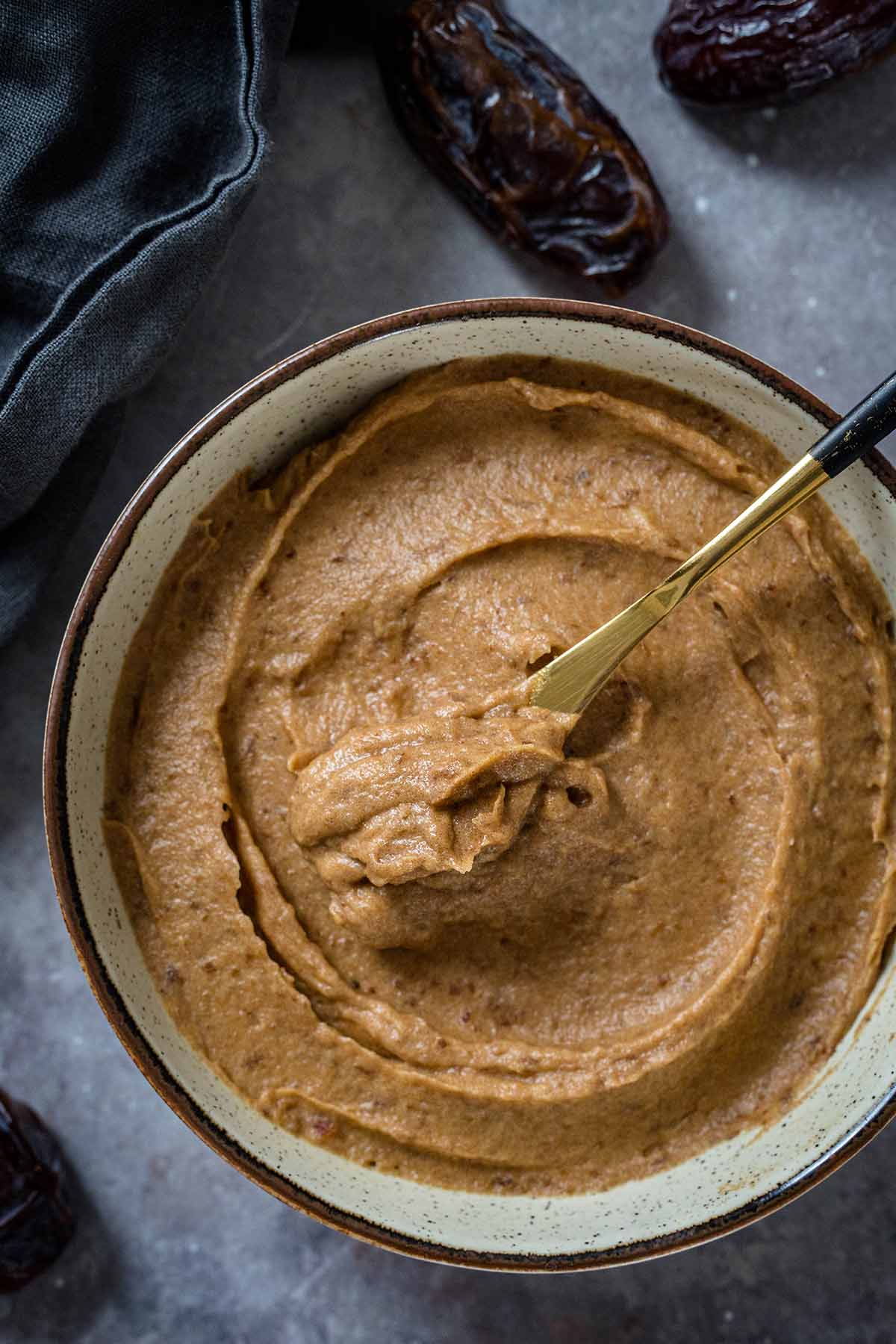
You can keep it in the fridge for up to one month or the freezer for up to 6 months. It doesn’t freeze completely, so you’re able to remove only what you need and let it thaw in the fridge before use.
I love making homemade alternatives to refined ingredients, and I hope you’ll enjoy using this in your baking as much as I do. Let me know your favorite uses, and check out some of my other recipes while you’re here.
How to Make Date Paste at Home
Recipe Video
Ingredients
- 2 cups lightly packed, pitted Medjool or other dates
- Boiling water , for soaking
Instructions
- Place the dates in a bowl and cover with boiling water. The dates should be completely submerged. Let soak for 20-30 minutes, until soft.For Medjool dates that’s enough but other varieties may need more time for soaking.
- Drain, reserving the soaking water. Transfer the soaked dates to a food processor or blender along with 1 tablespoon of soaking water. Process until you get a smooth paste. Stop and scrape sides, if needed.
- You should get a thick spreadable paste. For a thinner consistency, add more water while blending.
- Use immediately or store in an airtight container for up to two weeks.


No Comments