
One of my favorite takeout dishes is ramen. I just love the intensely savory flavor, the slippery noodles, and of course that classic noodle soup slurp! Being the foodie geek that I am, I wondered if I could make Homemade Ramen from the comfort of my own kitchen? And it turned out that I could!

How to Make Homemade Ramen
There are so many components to a perfect ramen soup. The purists say it starts with the broth; the noodle-fanatics say it’s all about getting just the right level of chewiness; and foodies obsess about the toppings. Making every part of a ramen dish yourself is feasible, but very time-consuming. I’ve chosen to concentrate on making my own hand-pulled noodles (which are surprisingly easy), marinating my own ramen eggs, and preparing the other toppings. Broths are a whole other story for another time…

Ramen Noodles
Traditionally, ramen noodles are made with a special type of alkaline mineral water, which helps give them a distinctive chewy texture. But I used tap water for my noodles, and they turned out just fine. The trick is not to roll the dough too thin, nor to stretch it too fine when pulling. I was surprised at how easy the noodles were to make, and how good they turned out!
The dough is simply 2 parts all-purpose flour to 1 part water, with a pinch of salt. Mix, then knead until smooth. Leave to rest, then roll out, cut into strips, and stretch each strip to about double its starting length.
The real experts will start with a much fatter strip of noodle dough and stretch their noodles much longer. You’ve probably seen videos of them doing it, doubling the noodles back on themselves again and again, slapping the dough against the counter top. But this method is simple even for complete beginners, and yields a good result. My noodles may not look so pretty or uniform as the professional ones, but they are pleasantly chewy, and easy to make.
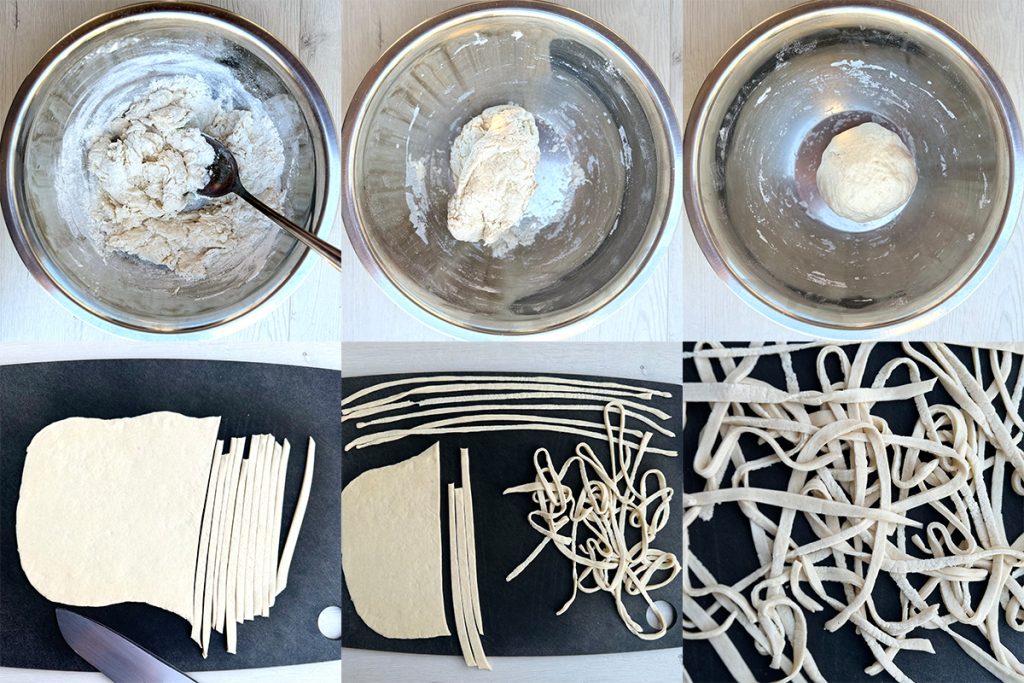
Of course, if this still looks intimidatingly difficult to you, feel free to choose store-bought noodles instead! All you need to do is cook according to packet instructions before adding to the broth in the serving bowls.
How to Make Ramen Eggs
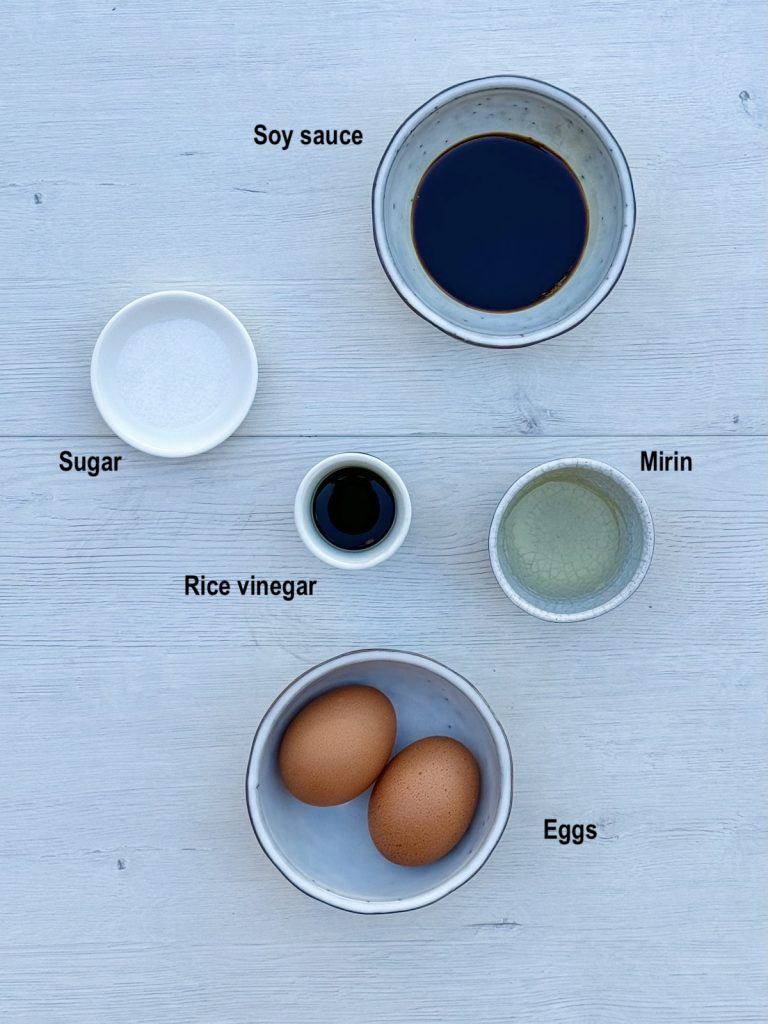
Ramen eggs are technically an optional topping, but in my opinion, they’re non-negotiable! Luckily they are very easy to make. All you need to do is to think ahead a little, to give them enough marinating time.
Boil the eggs, leave to cool, then peel them. Meanwhile, mix the marinade ingredients, then plunge the peeled eggs into the marinade and refrigerate for 6 hours (or more) until ready to eat.
Additional Toppings
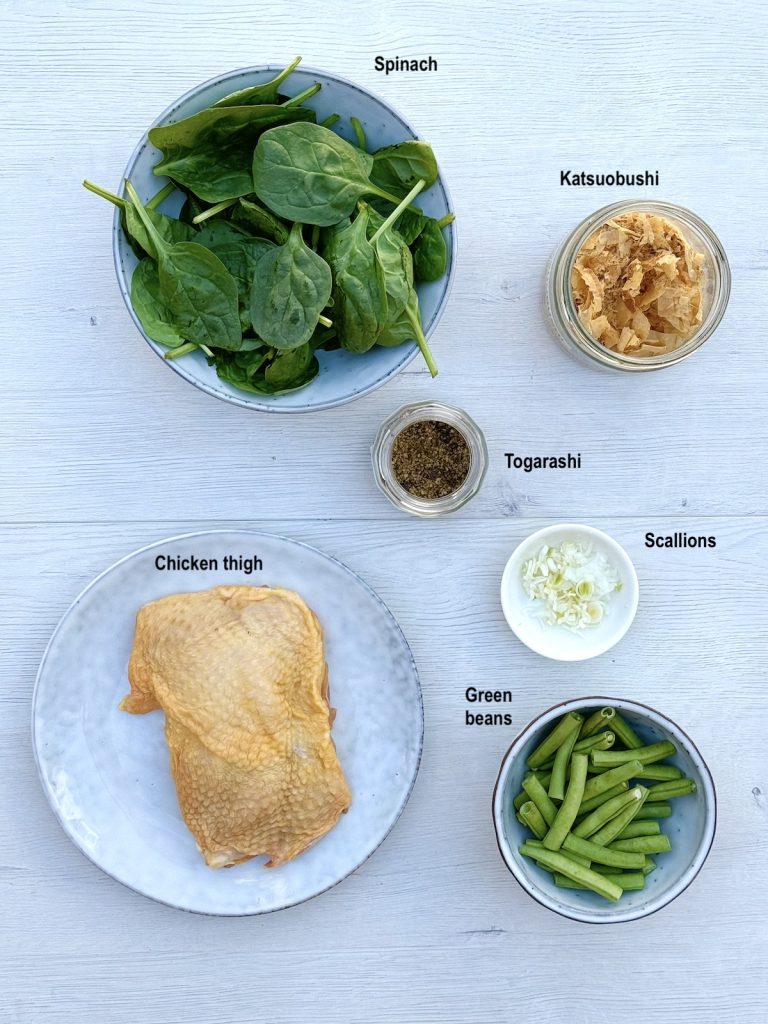
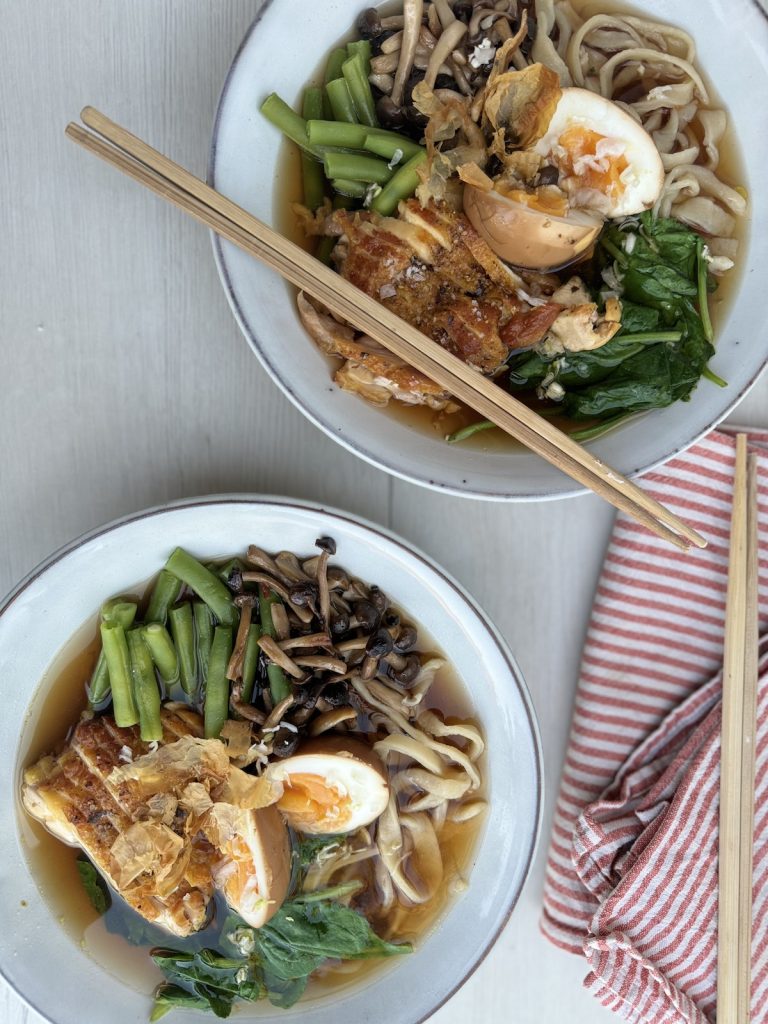
The sky’s the limit here! I chose to go with togarashi grilled chicken, shimeji mushrooms, scallions, spinach, and green beans. And a little katsuo bushi on the top, because why not? Other common toppings include thinly sliced roast pork belly, bok choy cabbage leaves, bamboo shoots, bean sprouts, and fish cakes.
What is Katsuo Bushi?
Katsuo bushi is widely used in Japanese cooking. It is dried bonito tuna, that has been smoked and flaked into paper-thin wisps. You should be able to find it easily in an Asian grocery store, or order from Amazon.
What Type of Ramen Broth?
There are four basic types of ramen broth:
- Shoyu broth: A soy-sauce-based broth, using chicken broth simmered with aromatic or umami ingredients, with soy sauce added for extra flavor.
- Shio broth: A pale, salty chicken broth, often with added pork or seafood.
- Miso broth: Similar to a miso soup base. Miso paste is stirred into an aromatic broth to yield a cloudy, umami-rich soup.
- Tonkotsu broth: An incredibly rich broth made by simmering pork bones for many hours. Tonkotsu is milky white and so thick with collagen that it will coat the back of a spoon.
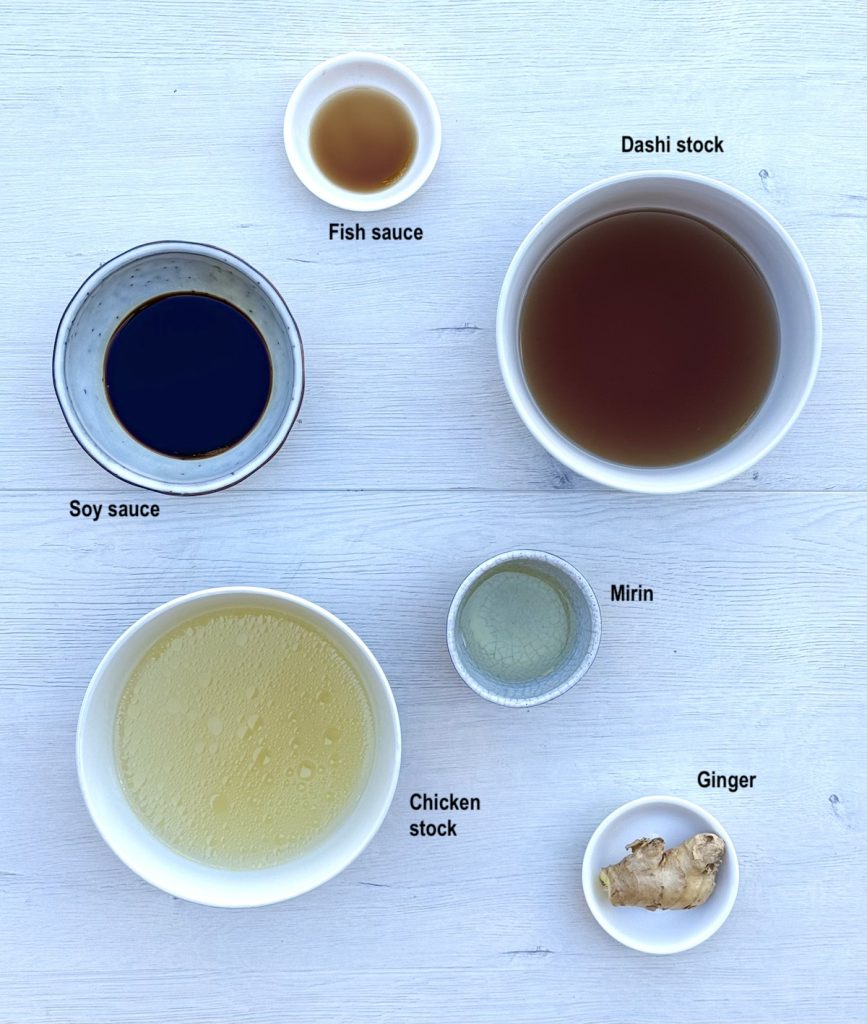
Made authentically, all of these take a long time. I decided to make a “cheat’s version” of a shoyu broth, by using homemade chicken broth mixed with a dashi stock as a base, before flavoring with ginger, soy, mirin, and fish sauce.
What is Dashi Stock?
Dashi stock is a common Japanese broth made by cold-steeping kombu seaweed before simmering with katsuo bushi. I happened to have some in the freezer from a previous experiment with homemade miso soup. However, you can also buy dashi stock powder from Asian grocery stores. Look for one without any additives.
Once you have your chicken broth and dashi broth, the process for completing the soup base is simple. Mix the two stocks together and infuse with the sliced ginger before straining and adding the rest of the ingredients.
Assembling Homemade Ramen
When making ramen, the toppings are not cooked in the broth, but added to the serving bowl. This means that you need to cook all the separate elements independently! I tried to limit the number of pots and pans to make my ramen recipe more accessible. The chicken is fried to yield beautiful crispy skin, then sprinkled with togarashi powder. The shimeji mushrooms are fried in the same pan, after the chicken, so they soak up extra flavor. Green beans are boiled and the spinach steamed over the same pan. The scallions and katsuobushi are used as a garnish.
How to Make Quick and Easy Homemade Ramen?
I do think it’s worth the extra effort, but there’s no denying that this recipe is quite a project. However, you can make it considerably easier by buying both stock and noodles rather than making your own. Ramen soup stock powder is widely available online and in specialist stores. Noodles are even easier to find, and are usually labeled as ramen noodles.
You can also save yourself a lot of time by using leftovers as toppings. Most plain cooked vegetables will go well in a ramen noodle soup, as will grilled or roasted meat. Feel free to experiment with what you have in the fridge.
At the very least, though, I do think you should make your own ramen eggs. Although you can sometimes buy them ready-marinated, they’re much harder to find, and it’s really only 5 minutes of hands-on work.

Storage Notes
Once assembled, the recipe does not keep well. However, you can prepare all the separate components, and store in the fridge until ready to eat. The one exception is the noodles. You can make the noodle dough in advance, or even the day before. But they should be cooked immediately after being pulled, and eaten straight from the cooking pot.
Looking for More Noodle Recipes?
Noodles are always a popular choice in my house! If you don’t feel like ramen tonight, try out one of my other noodle recipes instead!
Chicken Teriyaki with Rice Noodles
Broccolini Noodles with Arugula Pesto

Conclusion
I hope you’re feeling inspired to give Homemade Ramen a try! Whether you choose to make everything yourself from scratch, or take one of the cheat’s shortcuts, you’ll not only have a beautiful bowl of slurpy noodle soup, but a sense of pride and achievement! What broth are you going to try, and which toppings do you favor? Let me know in the comments how you get on!
Homemade Ramen
Ingredients
For the Ramen Eggs
- 2 eggs
- 1/4 cup soy sauce
- 2 tbsp mirin
- 1 tbsp black rice vinegar
- 2 tsp sugar
For the Noodles
- 3/4 cup all-purpose white flour
- 4-5 tbsp water
- 1 pinch salt
For the Broth
- 1 1/2 cup chicken stock
- 1 1/2 cup dashi stock
- 1 piece fresh ginger sliced
- 1/5 cup soy sauce
- 2 tbsp mirin
- 1 tbsp fish sauce
For the Toppings
- 1 chicken thigh boneless
- 1 cup spinach
- 1/2 cup green beans topped and tailed
- 4 oz shimeji mushrooms cleaned and separated into clumps
- 1 scallion finely chopped
- 1 tsp cooking oil
- 1 pinch togarashi powder
- 2 pinches katsuo bushi
Instructions
Ramen Eggs
- Bring a pot of water to a boil. Boil the eggs for 6 minutes, then plunge into an iced water bath.
- Mix all the other ingredients together in a small bowl.
- Peel the eggs and submerge in the marinade. Cover and refrigerate for at least 6 hours.
- When ready to use, lift out of the marinade with a slotted spoon and halve lengthwise.
For the Noodles
- Mix the flour, salt, and water together in a bowl. Knead until it comes together into a smooth dough.
- Wrap with plastic wrap and leave to rest for at least 1 hour (overnight is fine).
- When ready to cook, bring a pot of water to a boil.
- Meanwhile, roll out the dough on a lightly floured surface to about 1/8 inch thickness. Cut into 1/8 inch thick strips.
- Pull each noodle strip gently from both ends until it approximately doubles in length.
- Drop the noodles one by one into the boiling water. They are ready when they float – no more than 1-2 minutes.
Broth
- Mix the chicken stock and ramen broth together in a pan with the sliced ginger. Bring to a boil, simmer for 2 minutes, then turn off the heat.
- Once cooled to room temperature, strain to remove the ginger, and add the soy sauce, mirin, and fish sauce.
Toppings
- In a small frying pan, heat the oil over medium heat. Add the chicken thigh, skin side down, and fry for about 6-8 minutes until the skin is crispy.
- Turn the chicken over, and sprinkle the skin with a generous pinch of togarashi powder and salt. Fry for another 5 minutes, until cooked through. Set aside to rest.

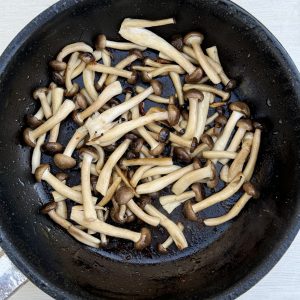
- Add the shimeji mushrooms to the hot pan, and fry for 2-3 minutes until fragrant and just starting to turn golden brown in places.
- Meanwhile, bring a pan of water to a boil. Cook the beans for 5 minutes, until tender.
- For the last 1 minute of cooking, add a steamer basket with the spinach over the pan of water.
- Drain the beans, and set aside with the spinach.

To Finish
- Heat the stock until just boiling. Ladle the stock into serving bowls.
- Add the noodles, beans, spinach, and shimeji mushrooms to the bowls.
- Slice the chicken into thin strips and split between the bowls, skin side up.
- Top with the ramen eggs in the middle of the plate.
- Scatter over the scallions, and add a pinch of katsuo bushi to each bowl. Enjoy!


No Comments