
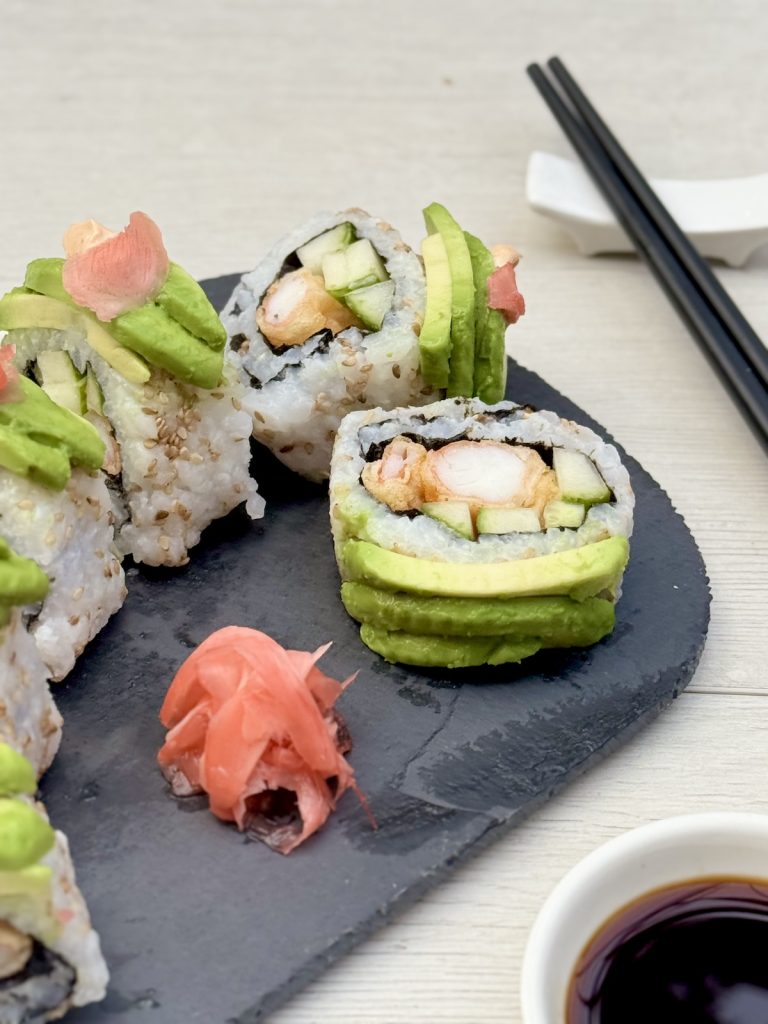
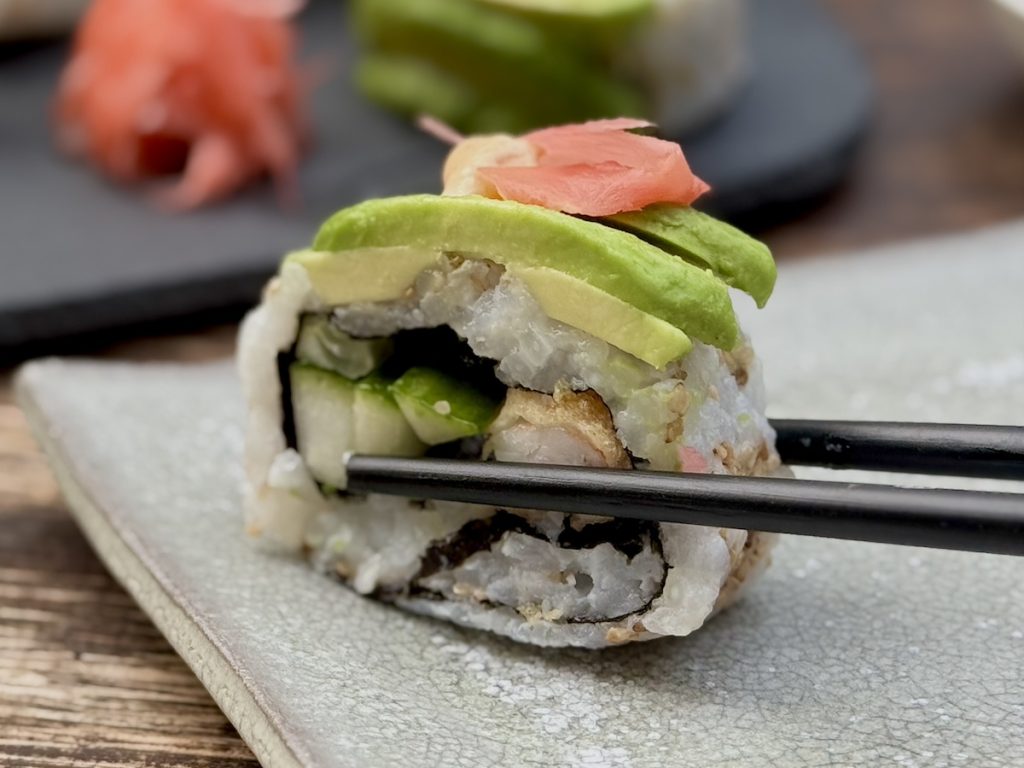
Dragon Rolls are a type of uramaki sushi. Eel or shrimp make up the filling, avocado slices are arranged on top of the sushi roll and the whole thing is topped with a spicy mayonnaise. In Japan, they are considered a festive sushi, eaten at celebrations and parties. And the good news is that they are much easier to make than you think! Stick with me to find how.
What to Put Inside Dragon Rolls?
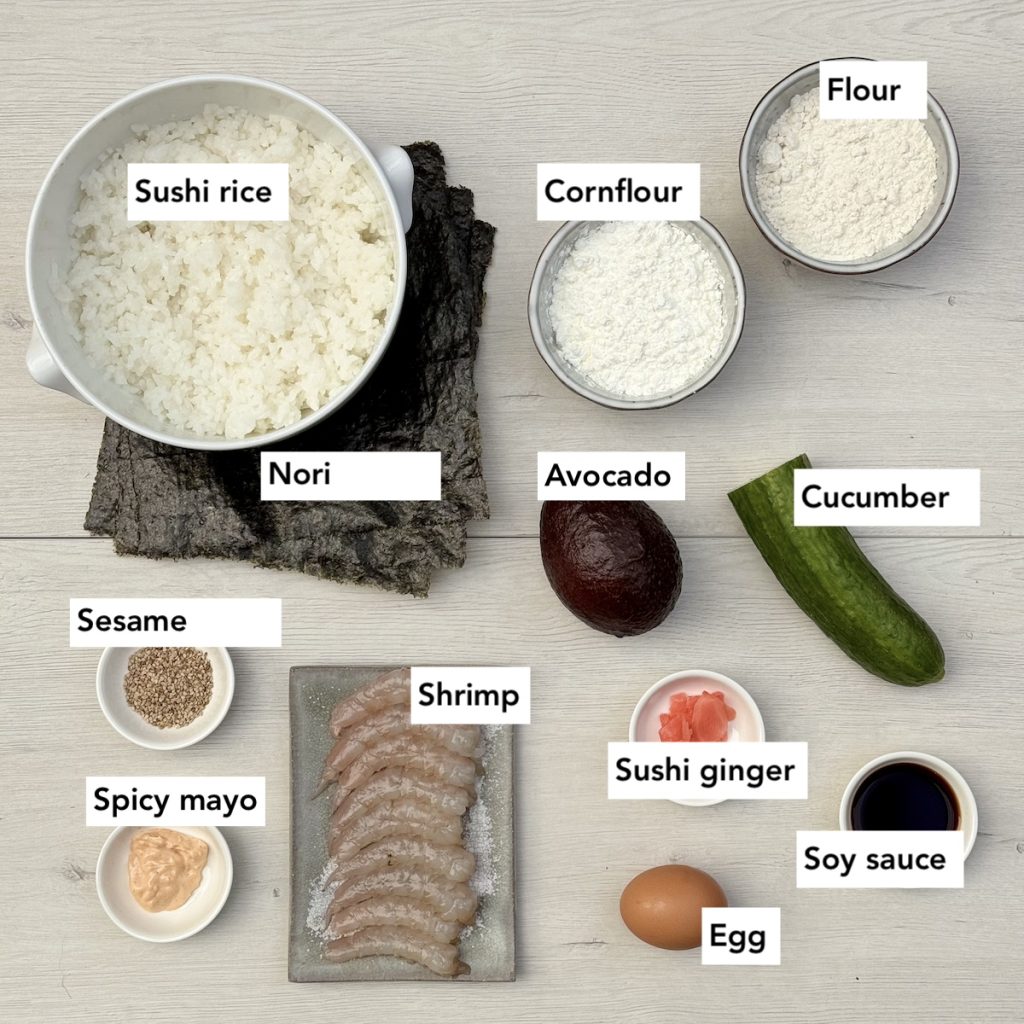
Traditional fillings include unagi – eel – or shrimp. I had been wanting to try out making tempura for a while and was intrigued by a sushi menu offering tempura shrimp as an uramaki filling. So I decided to put those two things together and make tempura shrimp for my dragon rolls. Cucumber is also traditional, so I used that as well. Many dragon rolls use tobiko on both the outside and inside. I wanted to do that, but sadly couldn’t get my hands on any. However, if your Japanese grocery store sells tobiko, I definitely recommend using it.
How to Make Tempura
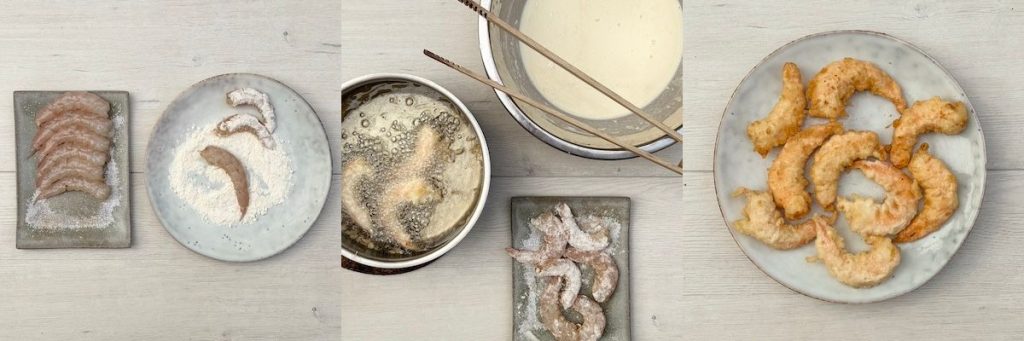
Tempura is very straightforward. All you need to do is to mix the batter, then dip in the shrimp (or vegetables), and deep fry in oil heated to 375°F . There are various recipes for batter, but I think the crunchiest results come from a mixture of all-purpose flour and cornflour. I find that the batter comes out a little lighter if I use soda water, but just regular water will do – it will still be very tasty.
Why Are They Called Dragon Rolls?
I went looking for some answers about this, and there are several competing explanations. One theory is that the overlapping avocado slices look like the scales of a green dragon. Another theory has it that the spicy mayonnaise make it red hot, like the fire of a dragon. And – although I couldn’t find anyone else mentioning this – with the pink and spiky sushi ginger I used, I also thought this slightly resembled the spines of a colorful dragon. So I’m going to go with the “resembles a dragon” theory. But however you choose to make it, it tastes delicious!

What is Uramaki Sushi?
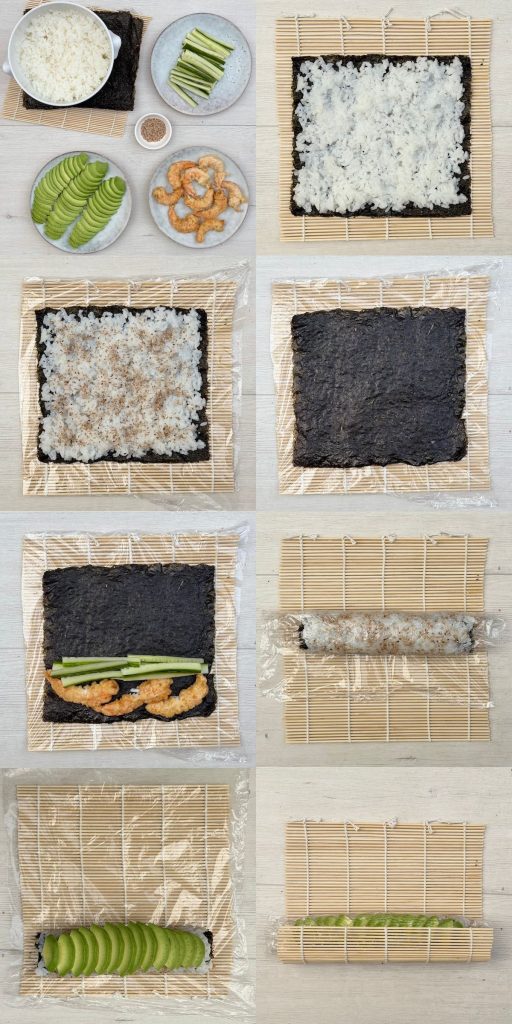
Uramaki sushi is also known as “inside-out” sushi. It means a sushi roll that has been rolled up with the rice on the outside rather than the nori seaweed sheet. Uramaki rolls give a lot more opportunity for toppings, because the sticky sushi rice holds onto the toppings well (whereas they slide straight off a regular maki roll). I thought it was going to be difficult, but actually, rolling uramaki sushi was straightforward. You spread the rice over the nori sheet in the regular way, and then just flip it upside down. The only thing that you need to do differently is to wrap your bamboo mat in plastic wrap, to stop the rice sticking to it.
Some More Tips
There are two main things that are important. Firstly, although you should be gentle, don’t be afraid to press quite firmly when rolling the sushi. What the bamboo mat does is to spread the pressure evenly along the roll, making it uniform and tight. You will need to roll it twice. Firstly just the rice and filling, then unroll it, add the avocado and roll again, pressing gently to mold the avocado slices to the shape of the sushi roll.
Secondly, use a good, sharp, unserrated knife to cut the uramaki roll into slices. If you try and do this with a blunt knife you will just end up squashing it instead.
Looking for More Rice Recipes?
Rice is so much more than a side dish! Try out one of the these unusual rice recipes, in which it becomes the star of the show!
Conclusion
If you’ve got a bamboo sushi mat sitting in a drawer somewhere, now you know what to use it for! Dust it off and get rolling an uramaki dragon roll. Trust me, it’s a lot easier than you think – and they taste absolutely delicious.
Dragon Rolls
Ingredients
For the tempura shrimp
- 9 large shrimp peeled
- 2/3 cup all-purpose flour
- 2/3 cup corn flour
- 1 egg
- 1 1/3 cups soda water
- vegetable oil for deep frying
For the dragon rolls
- 4 cups cooked sushi rice seasoned
- 3 sheets nori seaweed
- 1/2 cucumber cut in strips
- 1 tbsp sesame seeds
- 1 avocado peeled and sliced
To serve
- 1 tbsp spicy mayonnaise
- 1 tbsp sushi ginger
- 2 tbsp soy sauce or unagi sauce
Instructions
For the tempura shrimp
- Take 1 tbsp of all purpose flour and set aside. Sift the rest of the flour and rhe cornflour into a medium bowl.
- Make a well in the middle and add the soda water and egg. Whisk together, drawing the flours gradually into the liquid from the outside, until you have a smooth, loose batter.
- In a small, high-sided pan, add cooking oil to a depth of about 1 inch, and place over medium heat. Heat to a temperature of 375°F.
- Dredge half the shrimp through the reserved flour, then dip into the batter before transferring to the hot oil. Fry for about 2-3 minutes until golden and crisp.
- Lift out with tongs or a slotted spoon, drain on kitchen paper and repeat with the rest of the shrimp.
For the dragon rolls
- Spread one third of the seasoned rice onto a sheet of nori and scatter with one third of the sesame seeds.
- Wrap your bamboo sushi mat in plastic wrap and flip the nori over, so it is now rice side down on the covered mat.
- Arrange three shrimp in a line along the edge of the nori followed by one third of the cucumber.
- Roll up tightly, pressing down well with the sushi mat. Unroll and remove the plastic wrap.
- Place one third of the avocado slices along the top of the dragon roll. Replace the plastic wrap and roll up again with the bamboo mat, pressing firmly but gently together so the avocado curves to fit the roll.
- Unroll and place on a chopping board. Repeat with the other two sheets of nori and the rest of the ingredients.
- Slice each roll into 6-8 pieces of sushi.
- Top each slice with a small blob of spicy mayonnaise and a little pickled ginger. Serve with soy or unagi sauce on the side to dip.

No Comments