
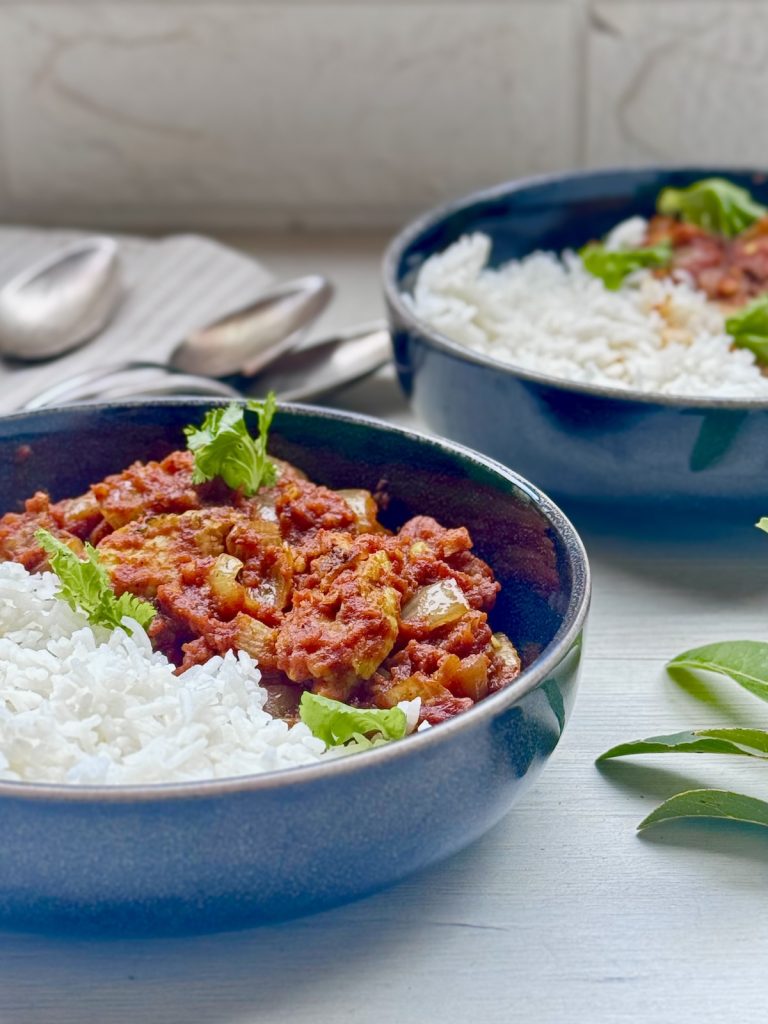
When the craving for something bold and warming strikes, a steaming bowl of Chicken Madras is the answer for me. As a classic Indian curry renowned for being an especially fiery one, it packs a serious punch that wakes up every single taste bud. The rich, ruby-red sauce balances intense heat with a sharp, tangy depth that keeps you coming back for spoon after spoon. If you want to turn up the volume on dinner tonight and fill your home with the intoxicating aroma of toasted spices, this vibrant dish will deliver in every possible way.
What is Chicken Madras?
Despite its name, Chicken Madras does not actually originate from the southern Indian city of Chennai (formerly Madras) in the exact way we recognize it today. Instead, the dish was largely developed and popularized by British curry houses, drawing heavy inspiration from the fiery, spice-laden flavors of southern India. In the broader Indian culinary canon, traditional curries from that region often feature heavy notes of roasted spices, tamarind, and coconut, tailored to withstand tropical climates. What makes Madras unique compared to milder counterparts like a creamy korma or a sweet tomato tikka masala is its uncompromising heat profile and sharp, tangy backbone. It is a robust, restaurant-style curry designed for those who like their dinner with a bold, sweat-inducing kick.
What Goes Into a Chicken Madras Curry?
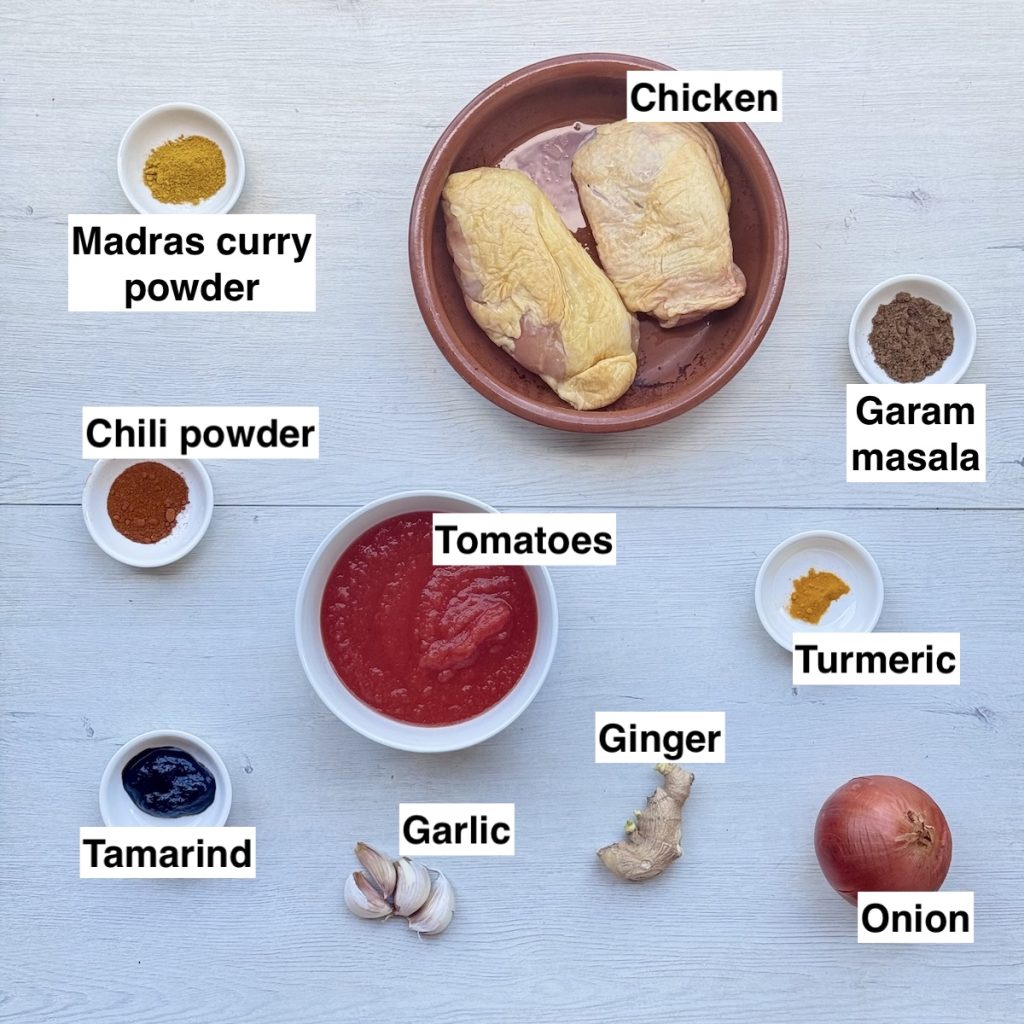
The magic of this curry lies in its complex spices and flavor bases. We start with four types of dried spice: chili powder, turmeric, garam masala, and Madras curry powder. While chili powder brings the primary heat and turmeric provides that vibrant golden hue, the latter two do the heavy lifting for flavor. Garam masala is a warm, aromatic blend typically containing cinnamon, cardamom, cloves, and cumin that is usually stirred in toward the end to bloom its fragrance. Madras curry powder, on the other hand, is a punchy, proprietary mix loaded with coriander, cumin, fenugreek, and mustard seeds specifically formulated to give this dish its signature profile.
Beyond the dry spices, tamarind paste plays a crucial role by adding a deep, complex sour tanginess that cuts straight through the richness of the meat. Finally, we anchor the whole dish with fresh aromatics: onion, garlic, and ginger. Think of these three as the absolute base of the curry, acting in the exact same way a classic Italian sofrito of onion, celery, and carrot lays the structural groundwork for a rich winter stew.
Cooking the Chicken
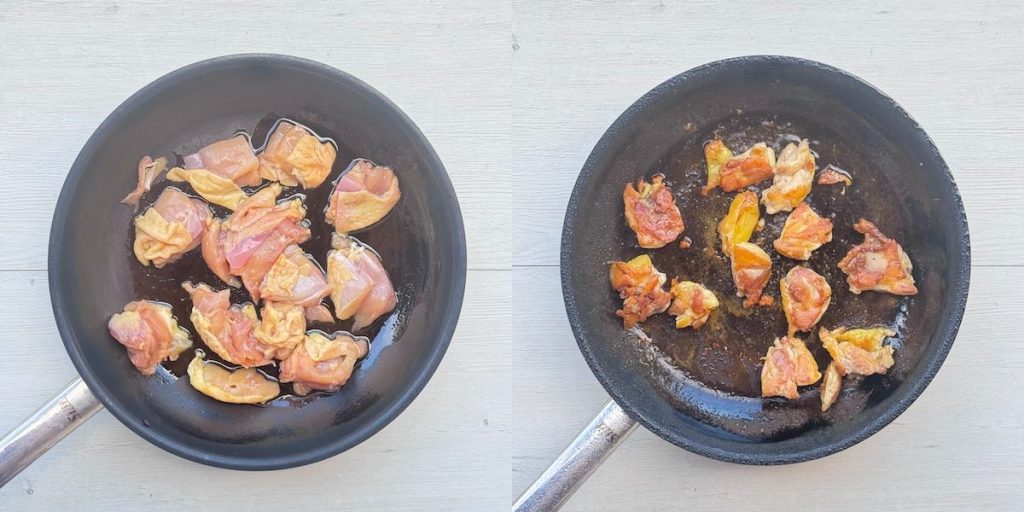
When I make this curry, I like to use two different cuts of chicken—both breast and thigh. This combination adds rich flavor and juiciness from the darker thigh meat, but still provides plenty of clean bulk and lean protein from the breast. Because a Madras is a relatively fast-cooking curry and is not simmered for hours, there is zero worry about the breast meat drying out. We kick off the process by browning the chicken pieces directly in hot oil to develop a gorgeous, savory crust before any sauce ingredients enter the pan.
Deglazing and Aromatics
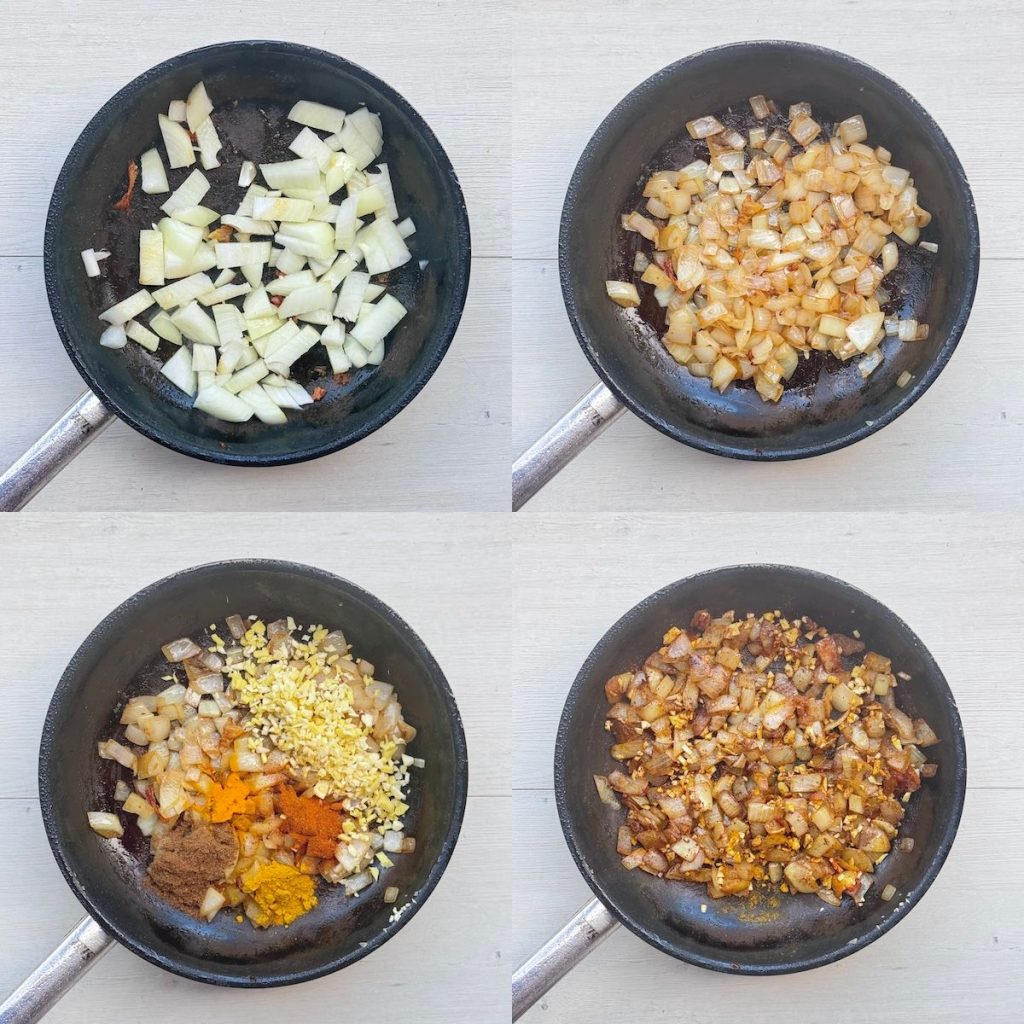
Once the chicken has a nice sear, we add the chopped onion straight to the hot chicken pan. The moisture released from the onions will deglaze the pan, dissolving all those wonderful browned bits stuck to the bottom and adding incredible depth to the flavor as they soften and caramelize. Next, we stir in the dried spices, freshly grated ginger, and minced garlic. Because these ground spices and aromatics burn very quickly in dry heat, you only want to fry them for a few frantic moments until fragrant. Your entire kitchen will instantly turn wonderfully warm and spicy.
Simmering the Curry
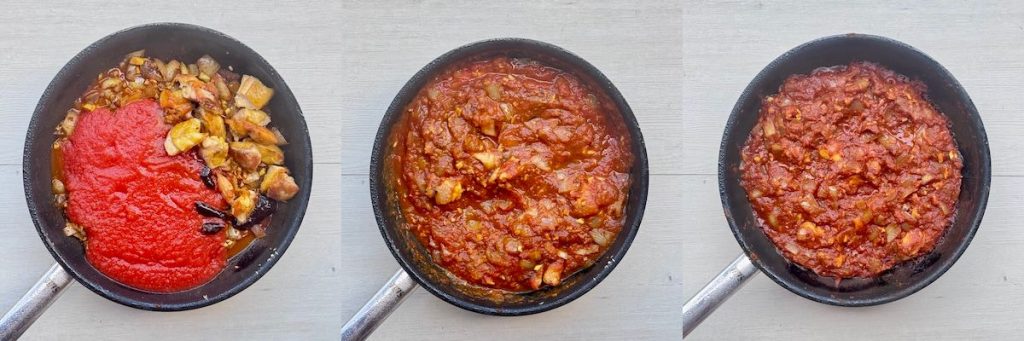
To finish the base, return the chicken back into the pan along with the crushed tomatoes and that essential tamarind paste. These wet ingredients will pick up any last remaining bits of chicken flavor left over from the initial sear. Simply stir everything together into a cohesive, fiery red sauce, and let it gently simmer until the liquid has reduced and thickened into a glossy, clingy coating that wraps around every single piece of chicken.
What to Serve with Chicken Madras
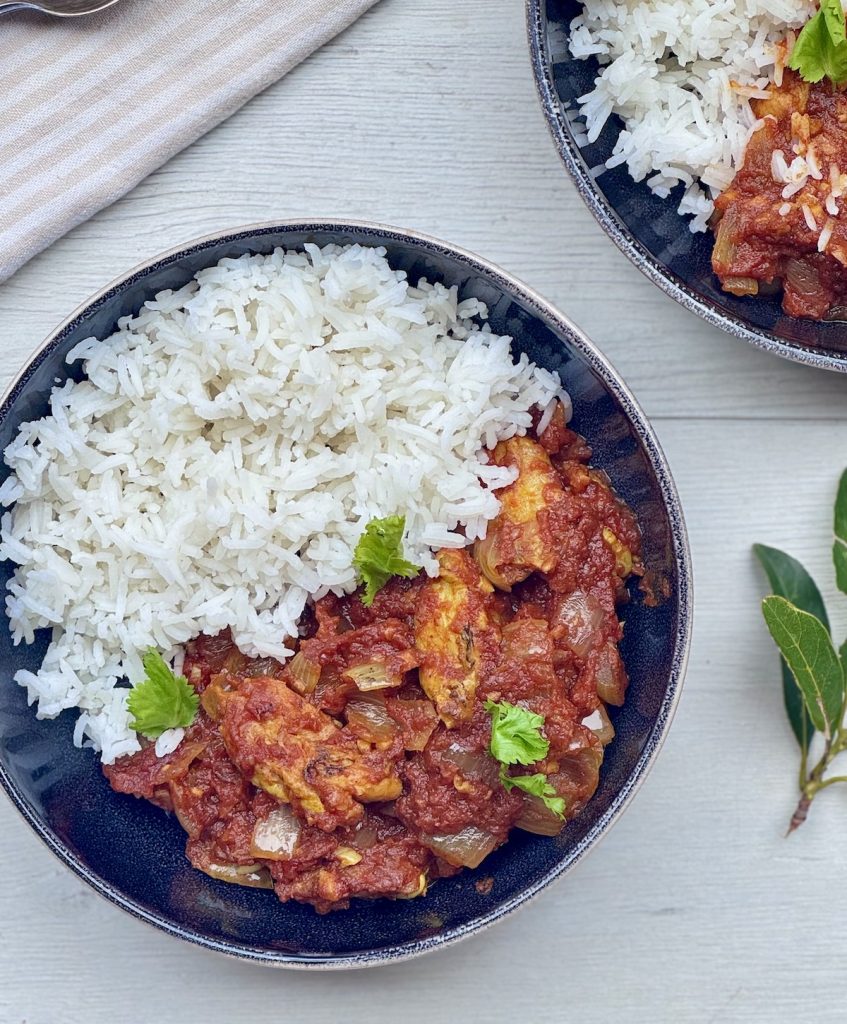
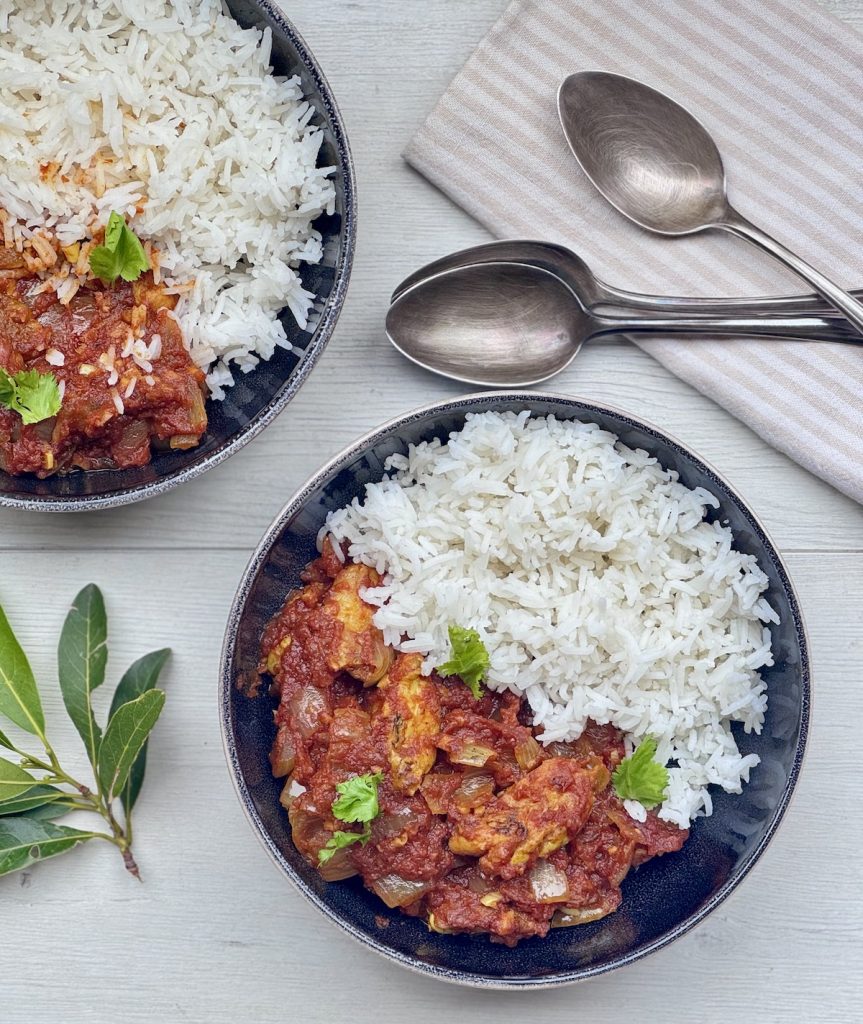
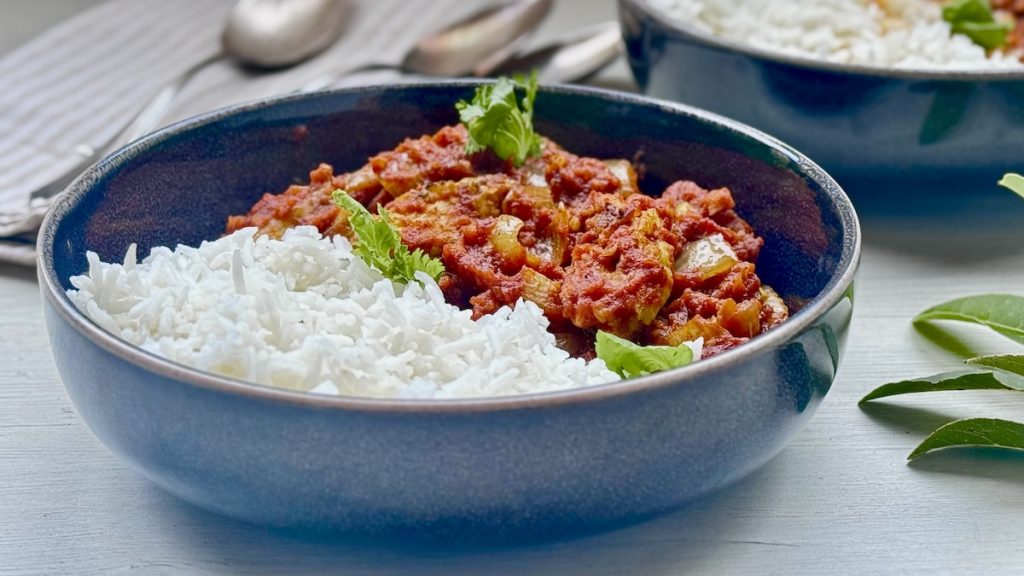
Like most Indian curries, this dish is best served alongside plain rice or fresh naan bread. Because the Madras curry itself is so intensely flavorful, packed with heat, garlic, tamarind, and spices, you do not need to complicate things by adding extra ingredients to your carbs. A simple bed of fluffy basmati rice or any type of plain Indian flatbread provides the ideal, neutral canvas to soak up every drop of that fiery sauce without competing with the bold flavors.
Leftovers
If you happen to have any of this curry left over, you are in luck. The curry keeps exceptionally well in the fridge for a few days, giving the spices even more time to marry, so you can easily make it the day before and just reheat it when hunger strikes. It also freezes remarkably well. Just make sure the curry is completely defrosted overnight and heated all the way through to piping hot on the stove before you serve it up.
And More…
Looking for more Indian recipes? I’ve got lots!
Dinner Tonight?
It is time to step away from the mild, predictable weeknight dinners and give your palate something worth talking about. A properly made Madras doesn’t just feed you; it challenges you, warms you from the inside out, and turns an ordinary evening into an absolute sensory event. Grab your spices, don’t skimp on the tamarind, and let that bold red sauce bubble away on your stove tonight.

Ingredients
For the Madras sauce
- 2 tbsp oil
- 1 chicken thigh cut in chunks
- 1 chicken breast cut in chunks
- 1 onion peeled and sliced
- 4 cloves garlic crushed
- 3 tbsp ginger peeled and minced
- 1/4 tsp turmeric
- 2 tsp garam masala
- 2 tsp Madras curry powder
- 1 tsp chili powder more, or less, to taste
- 15 oz can tomatoes chopped
- 1 tbsp tamarind paste
- salt and pepper
- 2-3 sprigs cilantro for garnish
Instructions
- Heat the oil in a pan over medium heat. Add the chicken pieces and fry for about 5 minutes until golden. Lift out of the pan.
- Add the onion and fry for about 5 minutes until softened and colored.
- Add the garlic, ginger, turmeric, curry powder, chili powder and garam masala. Cook for 2 minutes more.
- Add the tomatoes and tamarind paste and return the chicken to the pan. Bring to a boil, turn the heat to low and simmer for about 15 minutes, until the sauce has thickened and the chicken is cooked through.
- Garnish with the cilantro leaves and serve hot, with rice or naan bread on the side.


No Comments