
Is there anything more satisfying than a bubbling pot of spice and warmth filling your kitchen? I don’t think so. This Vegetable Curry is one of my ultimate comfort foods, especially when the weather turns chilly or I just need a serious nutritional hug. It’s packed with vibrant colors, incredible textures, and a depth of flavor that makes you forget you’re eating something so healthy. Whether you’re a spice-seeker or a fan of mild, creamy goodness, this recipe is a total game-changer for your weekly rotation.

Vegetable Curry
The word “curry” itself is a bit of a linguistic traveler. Originally derived from the Hindi concept of a sauce or gravy (often linked to the word kari), it wasn’t historically a specific dish but rather a description of a way of cooking. In India, you’d rarely just order a “curry”; you’d order a specific dish like korma, jalfrezi, or madras. However, in the West today, curry is used more as a catchall term to mean any spiced Indian-inspired dish. It’s become a global favorite, evolving from its regional roots into a universal symbol of comfort and complexity.
Vegetable Curry is an absolute Indian classic, and what I love most about it is the sheer versatility. There are countless variations of vegetables, sauces, and spices depending on the region, the season, and even the specific household kitchen. You can have dry versions, saucy versions, coconut-based versions, or those with a sharp tomato base. The spices—the “masala”—are the heart of the dish, acting as a canvas for whatever vegetables are currently at their peak. It’s a masterclass in plant-based cooking that has been perfected over thousands of years. Whether it’s a humble roadside meal or a sophisticated restaurant centerpiece, this dish proves that you don’t need meat to create something robust and deeply satisfying. It’s a culinary tradition that prioritizes layering flavors, from the initial sizzle of whole spices to the final brightening squeeze of lime.
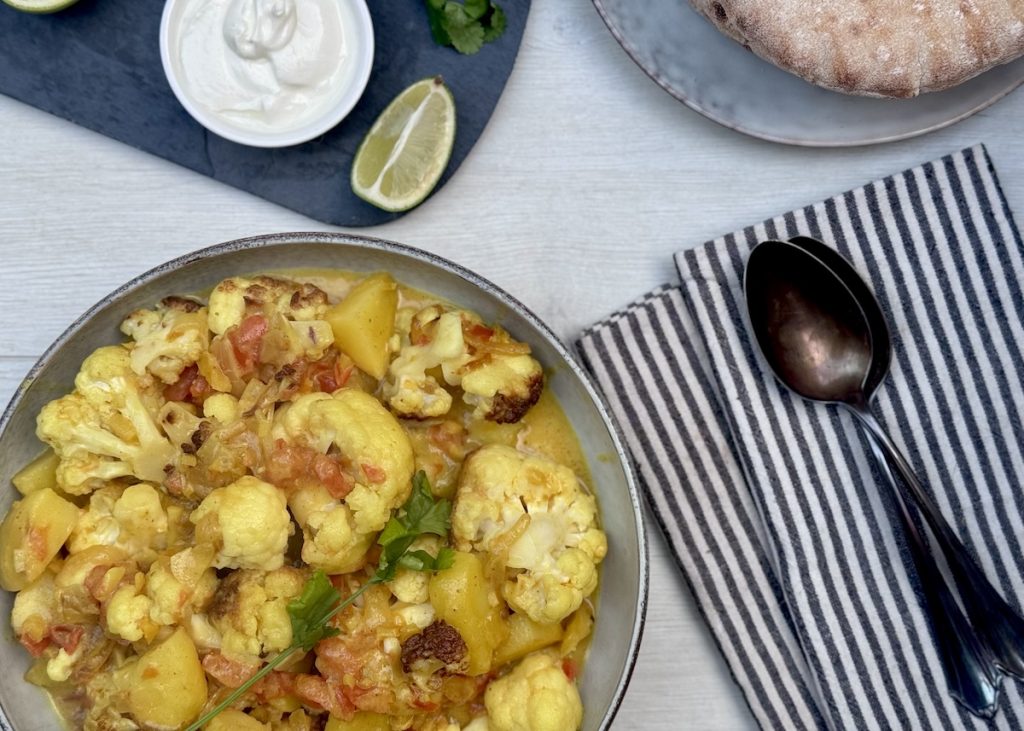
Gobi Aloo
This specific vegetable curry is actually based on a legendary duo: Gobi Aloo. In traditional Indian cooking, this is a “dry curry” classic consisting of cauliflower (gobi) and potatoes (aloo), sautéed until tender with plenty of spices but very little liquid. It’s a favorite in many homes because of its simplicity and earthy flavor. However, for this post, I am making it a wetter version, more like the familiar, saucy curry we often crave, by adding creamy coconut milk. It keeps the heart of the original but adds a luxurious, velvety finish that is perfect for mopping up with bread.
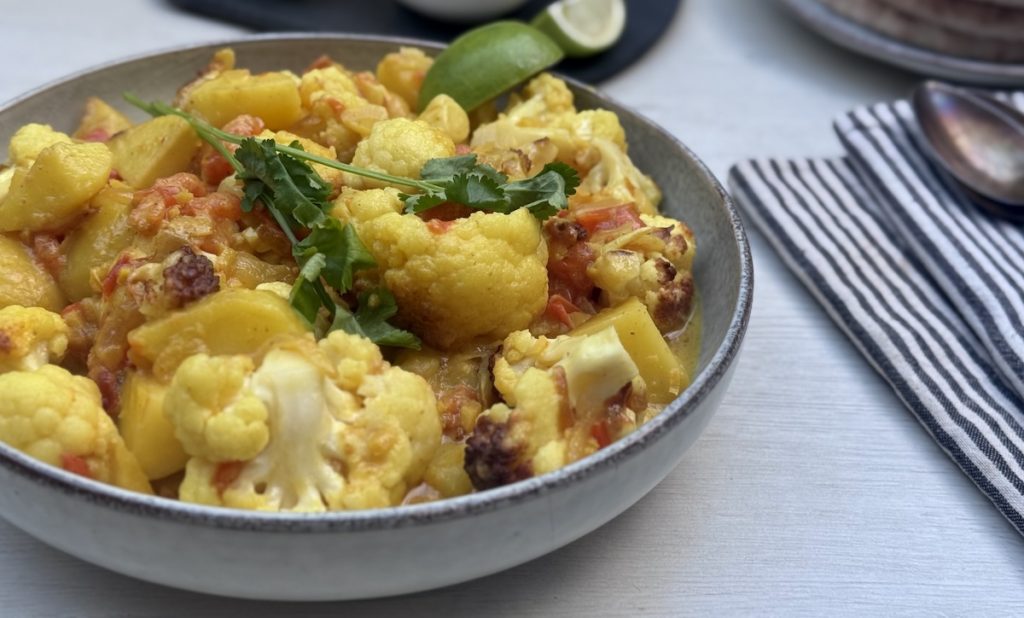
How to Make Vegetable Curry
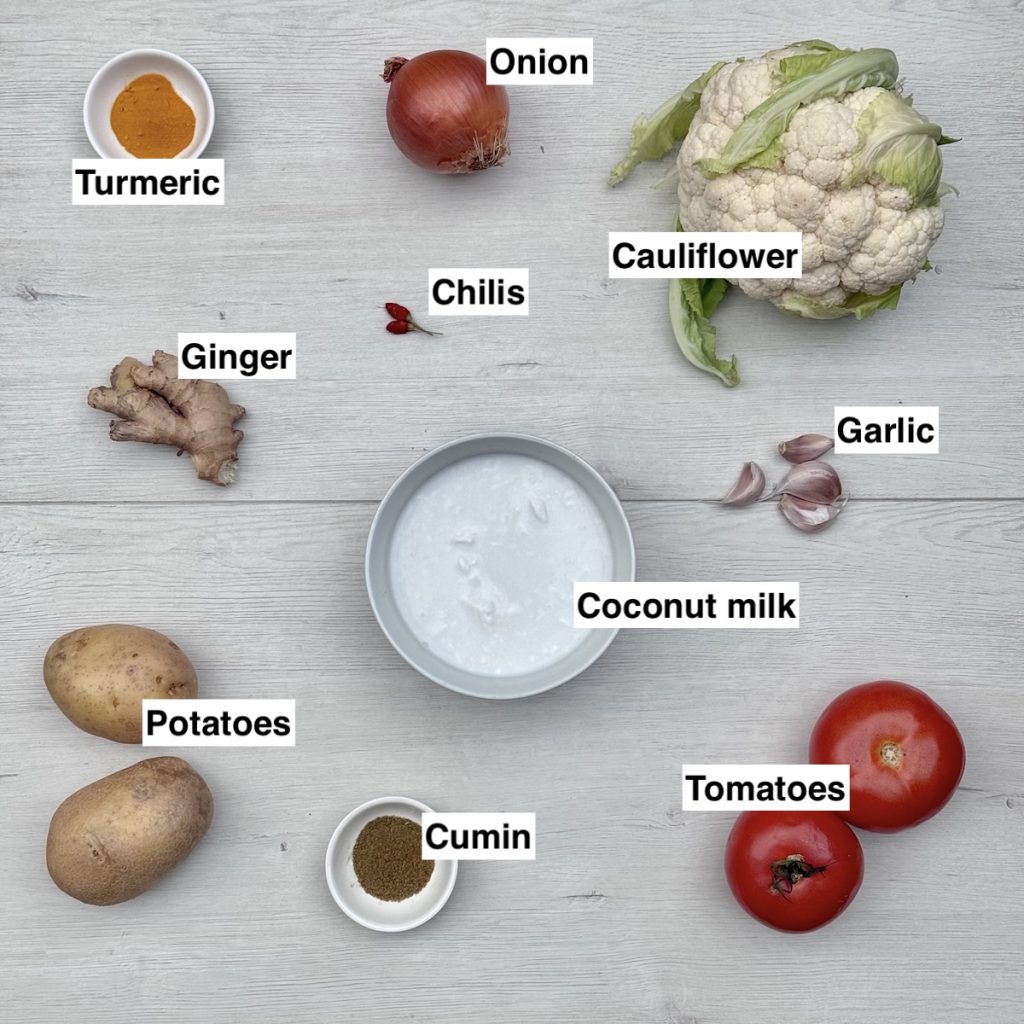
Making this is all about building layers. As well as the cauliflower and potato, I’m adding a lot of garlic and ginger to create a punchy, aromatic base. We also use tomatoes for a necessary tang that cuts through the richness. For that gorgeous golden hue and extra earthiness, turmeric and cumin are non-negotiable, and of course, I’ve included chilis for the heat. The beauty of a homemade vegetable curry is that you are in total control! If you like things fiery, you can go really hot by adding extra chilis, or keep it mild for a family-friendly dinner.
Fry the Veggies
We’re starting with a technique that many people skip: we’re frying the cauliflower and potatoes until they are beautifully browned. This is a technique you more usually see with meat—like searing a steak—but it works wonders here too. The goal is not to cook them through at this stage, but to pick up some color on the outside.
Why bother? Because browning (the Maillard reaction) creates complex, nutty flavor compounds that you simply won’t get by just boiling them in the sauce. When those golden, caramelized edges eventually simmer in the curry, they hold their texture much better and provide a savory depth that elevates the entire dish. It transforms the vegetables from simple “fillers” into the stars of the show. It takes a few extra minutes, but trust me, that extra layer of charred sweetness improves the flavor significantly.

Aromatics
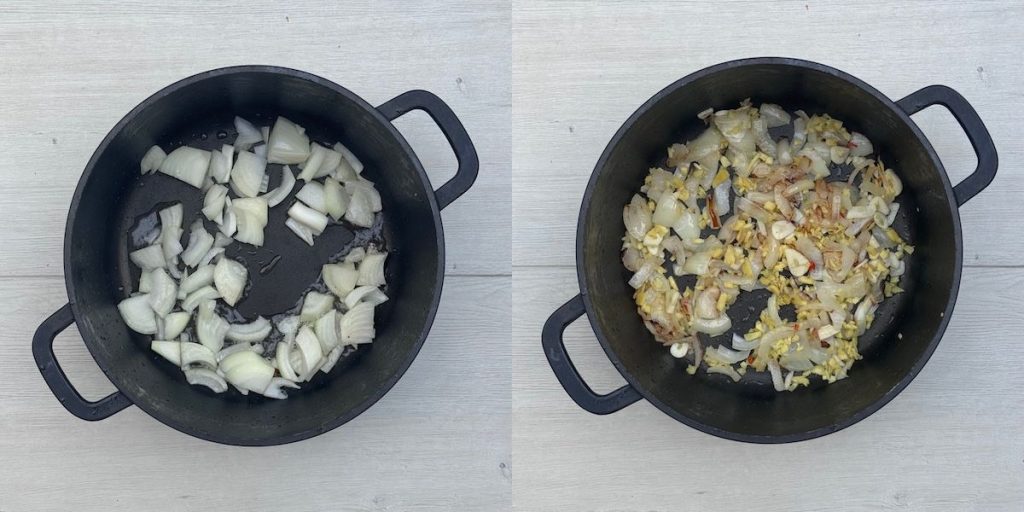
Once the veggies are browned and set aside, move on to the aromatics. We start by softening the onions in the same pan, followed by the garlic and ginger. You want them to become soft and translucent, not burnt! This step is crucial because it releases the essential oils and aromas, bringing a foundational flavor to the sauce that smells absolutely heavenly. It’s the perfume of the dish that tells your family dinner is almost ready.
Spices and Sauce
Now for the fun part! Add the tomatoes along with the spices, frying them briefly to wake up the turmeric and cumin. Next, we return the pre-fried veg to the pan and add the coconut milk. Give it a good stir to combine all those spices into a creamy sauce. Now, all you have to do is let it simmer gently until the potatoes are tender. The sauce will thicken and turn a stunning golden color as the vegetables soak up all that spiced goodness.

What to Serve with Vegetable Curry
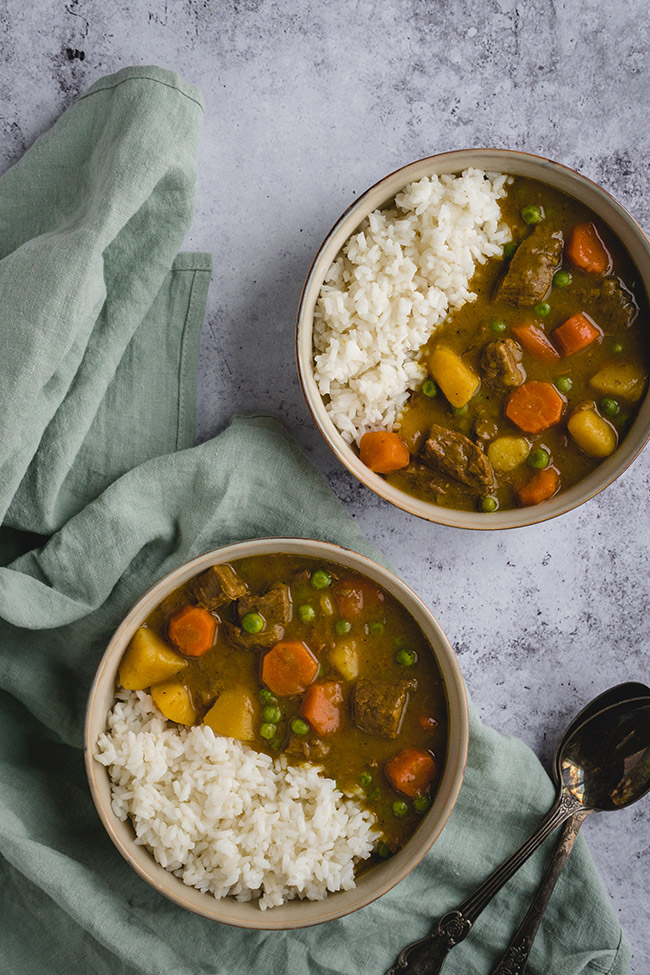
To make this a proper feast, you’ll definitely want some carbs on the side to mop up every last drop of that sauce. I personally prefer paratha, naan, or roti canai bread for that buttery, flaky texture, but basmati rice is also extremely common and delicious. For me, a handful of fresh cilantro is an absolute must-have for a hit of herbal brightness. And if you took my advice and made it very spicy, a dollop of plain yogurt on top is the perfect cooling companion!
And More…
Looking for more Indian food? I have a few things for you to try!

Conclusion
Get a pot of Vegetable Curry bubbling on your stove tonight. It’s such a rewarding way to eat—filling your home with amazing scents and your belly with wholesome ingredients. Whether you follow my wet Gobi Aloo style or branch out with your own veggie mix, the results are going to be so much better than anything from a jar. Give it a try, and let me know in the comments: are you team naan or team rice?

Ingredients
- 2 tbsp oil
- 1 cauliflower broken into florets
- 2 potatoes peeled and diced
- 1 onion peeled and sliced
- 4 cloves garlic peeled and sliced
- 1 knob ginger peeled and diced
- 2 tomatoes chopped
- 1 tsp turmeric
- 1 tsp cumin
- 2 chilis minced
- 1 can coconut milk 14 oz
- salt and pepper
- yogurt, roti, rice, etc, to serve
Instructions
- Heat half the oil in a pan over medium-high heat. Add the potatoes and cauliflower and cook for about 5 minutes, stirring, until browned in places. Lift out of the pan.
- Heat the remaining oil in the same pan and add the onions. Cook for about 3-4 minutes, then add the garlic, ginger, and chili and turn the heat down to medium. Cook for 2 minutes.
- Add the tomatoes and spices and cook for about 5 minutes, until the tomatoes have softened.
- Return the potatoes and cauliflower to the pan and pour in the coconut milk. Stir, and bring to a boil.
- Cook for about 10 minutes, until the potatoes are just tender. Season to taste and serve with rice or roti on the side, optionally with a spoon of yogurt.


No Comments