
The crunchy, vibrant world of fermented food holds a true star: Kimchi. Forget everything you thought you knew about a humble side dish; this is a potent, complex, and utterly addictive flavor bomb ready to revolutionize your cooking. Learn How to Make Kimchi at Home – it is a rewarding journey that connects you directly to a time-honored tradition. It allows you to control the heat, the tang, and the ingredients, moving far beyond the classic napa cabbage. If you’re ready for a culinary adventure that boosts your gut health while delivering unparalleled depth of flavor, it’s time to start fermenting!

What is Kimchi?
Kimchi is Korea’s national dish, a centuries-old tradition that is primarily a side dish (banchan) served at almost every meal. At its heart, kimchi is a preparation of salted and fermented vegetables, most famously the napa cabbage (baechu), mixed with a vibrant seasoning paste (yangnyeom) of gochugaru (Korean chili flakes), garlic, ginger, and other aromatics.
The fermentation process is what makes kimchi truly special and safe. By submerging the cabbage in a high-salt brine, a process called lacto-fermentation is started. This encourages the growth of beneficial bacteria (Lactobacillus) which produce lactic acid, safely preserving the food while creating its signature tangy, sour, and complex flavor. Unlike simple quick pickles, kimchi’s slow, controlled fermentation process is key to its depth and its renowned health benefits, making it a fantastic source of probiotics for gut health. While the cabbage version is the most recognized, kimchi is more of a technique, applied to a vast array of vegetables, including radish, cucumber, and scallions.
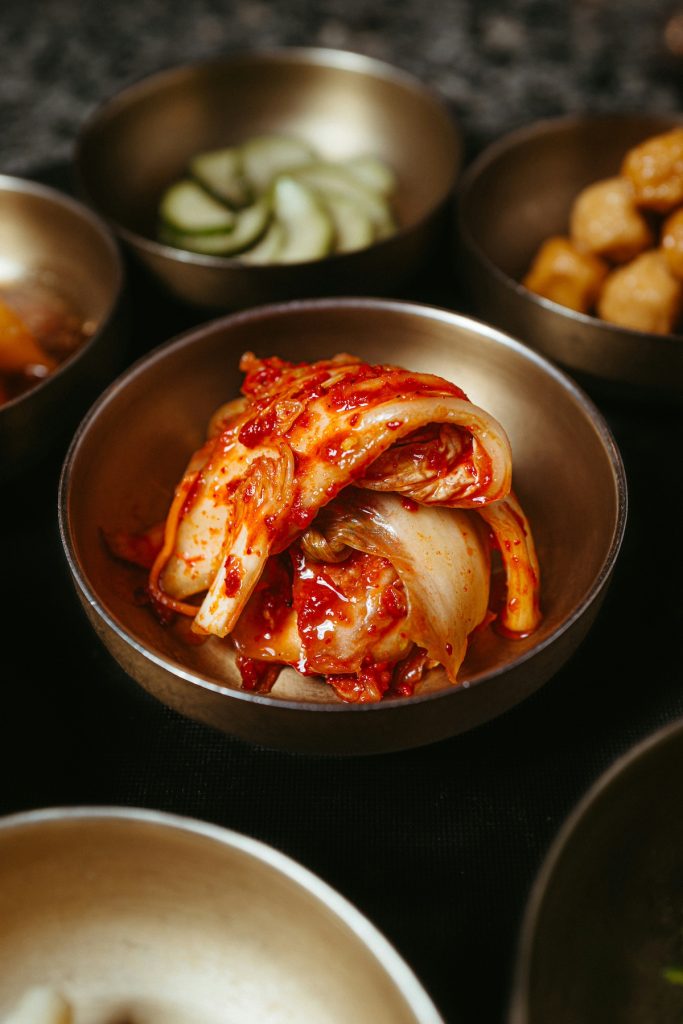
How to Make Kimchi at Home
Making a basic batch of napa cabbage kimchi is a straightforward but patient process. The first step is crucial: brining. Chop a head of napa cabbage into bite-sized pieces and toss them generously with coarse non-iodized salt. A sufficient salt level is essential for drawing out moisture and inhibiting the growth of harmful bacteria, creating a safe environment for the beneficial bacteria to thrive. 2-3% by weight is usual: weigh your chopped vegetables and add 2-3% of that weight in salt.
Let the cabbage sit for several hours (or overnight) until it has wilted and released a lot of liquid. Rinse the cabbage thoroughly, then toss it with your prepared seasoning paste. Pack the mixture tightly into a clean jar, pressing down to ensure the vegetables are submerged in their juices. Leave the jar at room temperature for 1–3 days. You’ll need to “burp” the jar daily to release built-up fermentation gases. When a pleasantly sour smell develops, your kimchi is ready to move to the refrigerator, where the cool temperature slows the fermentation down, allowing you to enjoy your delicious, homemade batch for weeks.
Ready to dive deeper than napa cabbage? Here are the best 8 recipes that showcase the diversity of this incredible Korean culinary tradition.
1. Kkakdugi (Cubed Radish Kimchi)
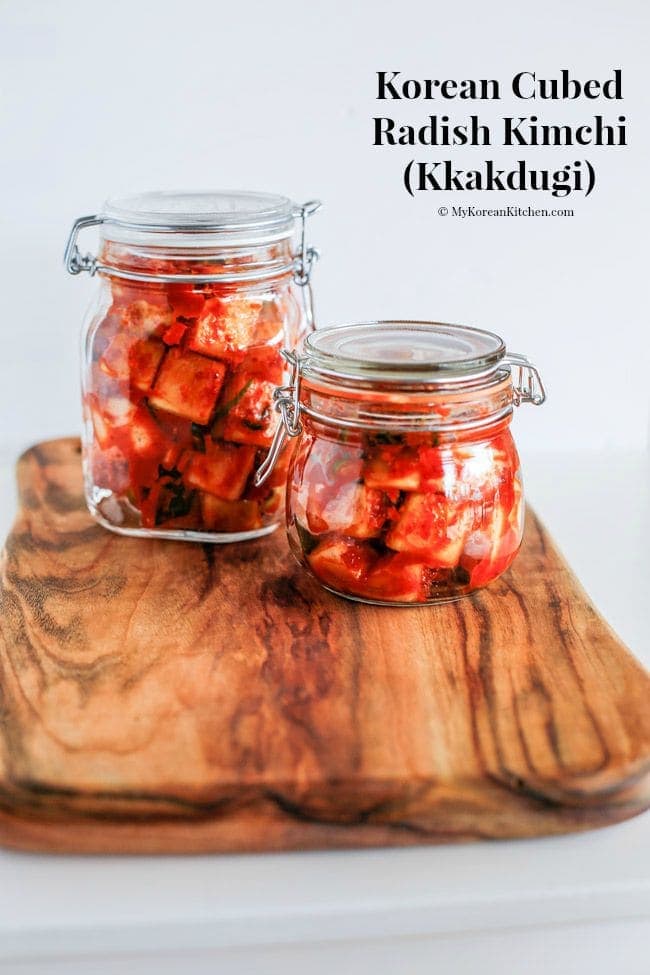
This crunchy, sweet-and-spicy kimchi uses Korean radish cut into satisfying cubes. It’s quicker to make than the cabbage variety since the radish requires less brining time, and it has an incredibly satisfying texture.
Recipe by: My Korean Kitchen
2. Oi Sobagi (Stuffed Cucumber Kimchi)
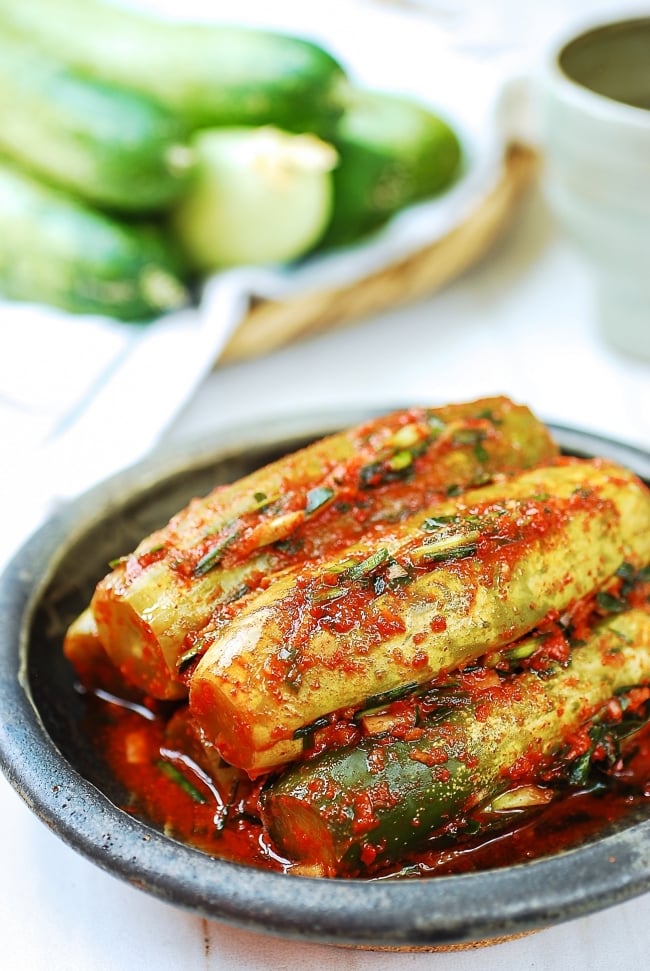
A refreshing and popular summer kimchi! Crisp cucumbers are quartered, hollowed out, and stuffed with a spicy filling of chives and carrots. It’s best eaten fresh for maximum crunch.
Recipe by: Korean Bapsang
3. Pa Kimchi (Green Onion/Scallion Kimchi)

This easy and delicious kimchi uses whole bunches of green onions (jjokpa). The sharp, pungent onion flavor pairs perfectly with the spicy paste, and it tastes great even after a short fermentation.
Recipe by: Maangchi
4. Baek Kimchi (White Kimchi)
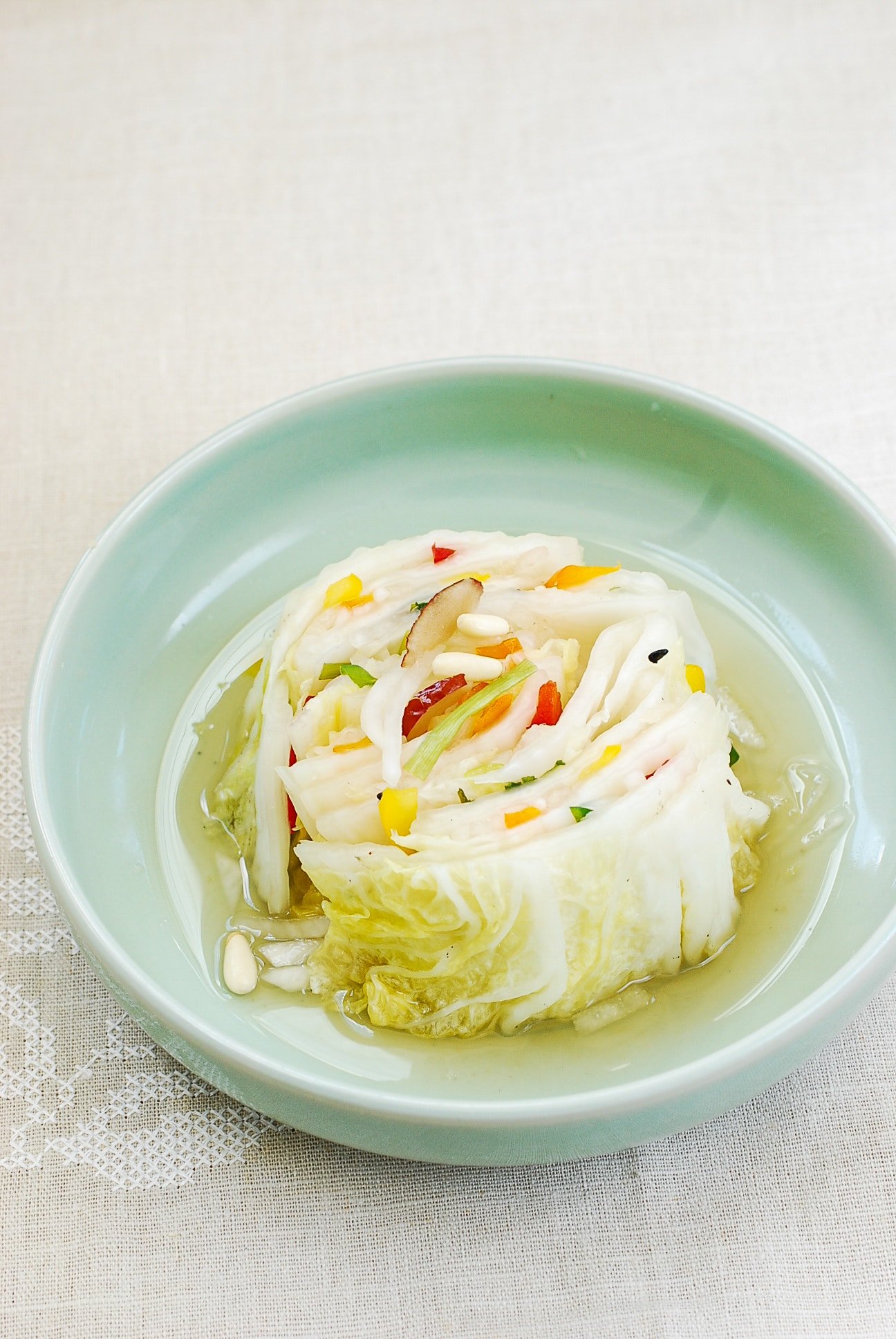
The perfect choice for those who want the fermented tang without the heat. This “white” kimchi uses a clear, non-spicy brine, often with fresh fruits like pear or jujube for a crisp, sweet, and mild flavor.
Recipe by: Korean Bapsang
5. Chonggak Kimchi (Ponytail Radish Kimchi)
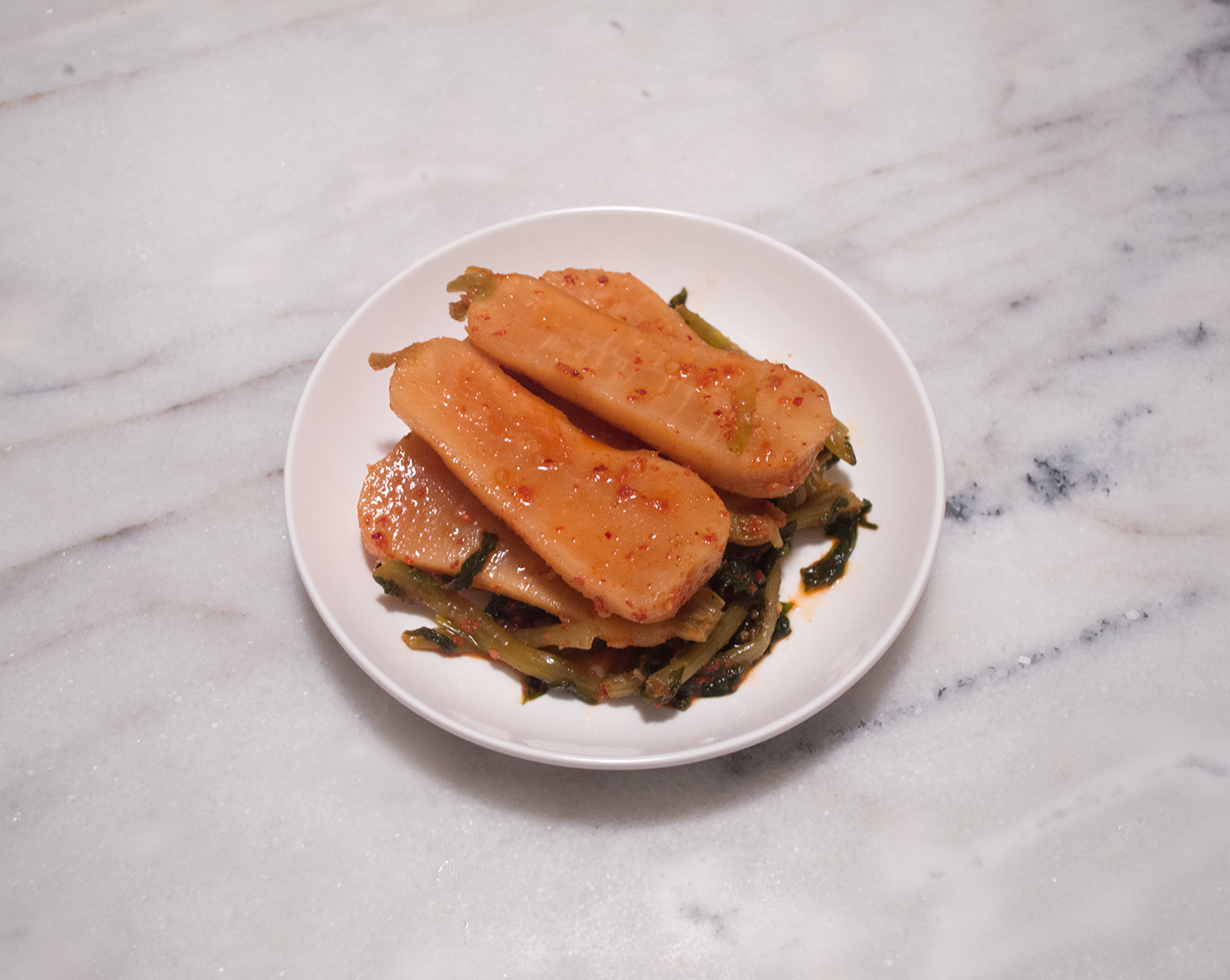
Made from a small, firm radish with its long, beautiful stems attached, this variety is known for its intense crunch and is particularly satisfying when served with rice or noodle dishes.
Recipe By: Every Bunny Eats
6. Bok Choy Kimchi
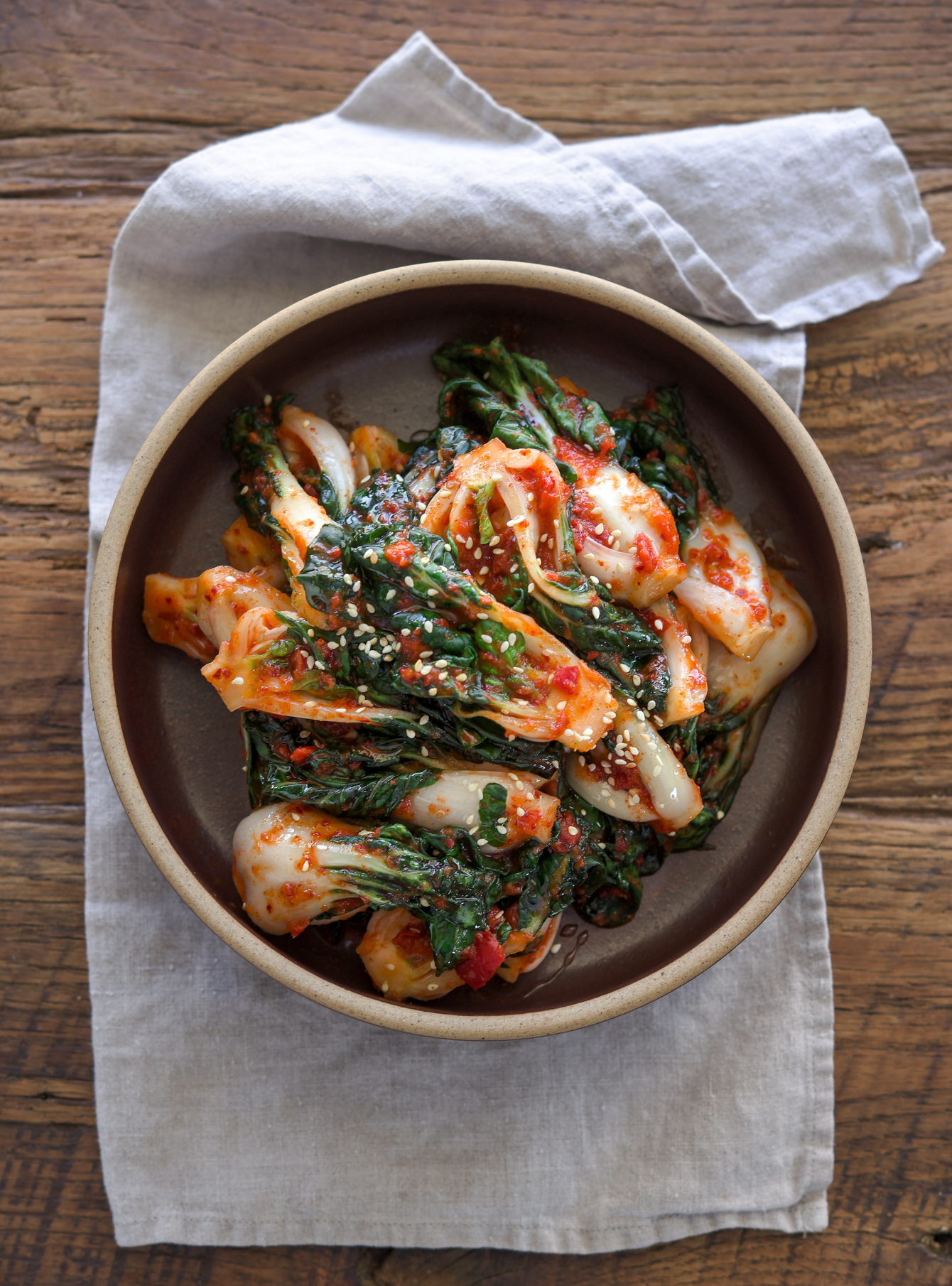
A simple and approachable recipe using bok choy, which is more readily available than napa cabbage in some areas. It yields a light, slightly sweeter, and incredibly versatile kimchi.
Recipe by: Beyond Kimchi
7. Buchu Kimchi (Garlic Chive Kimchi)
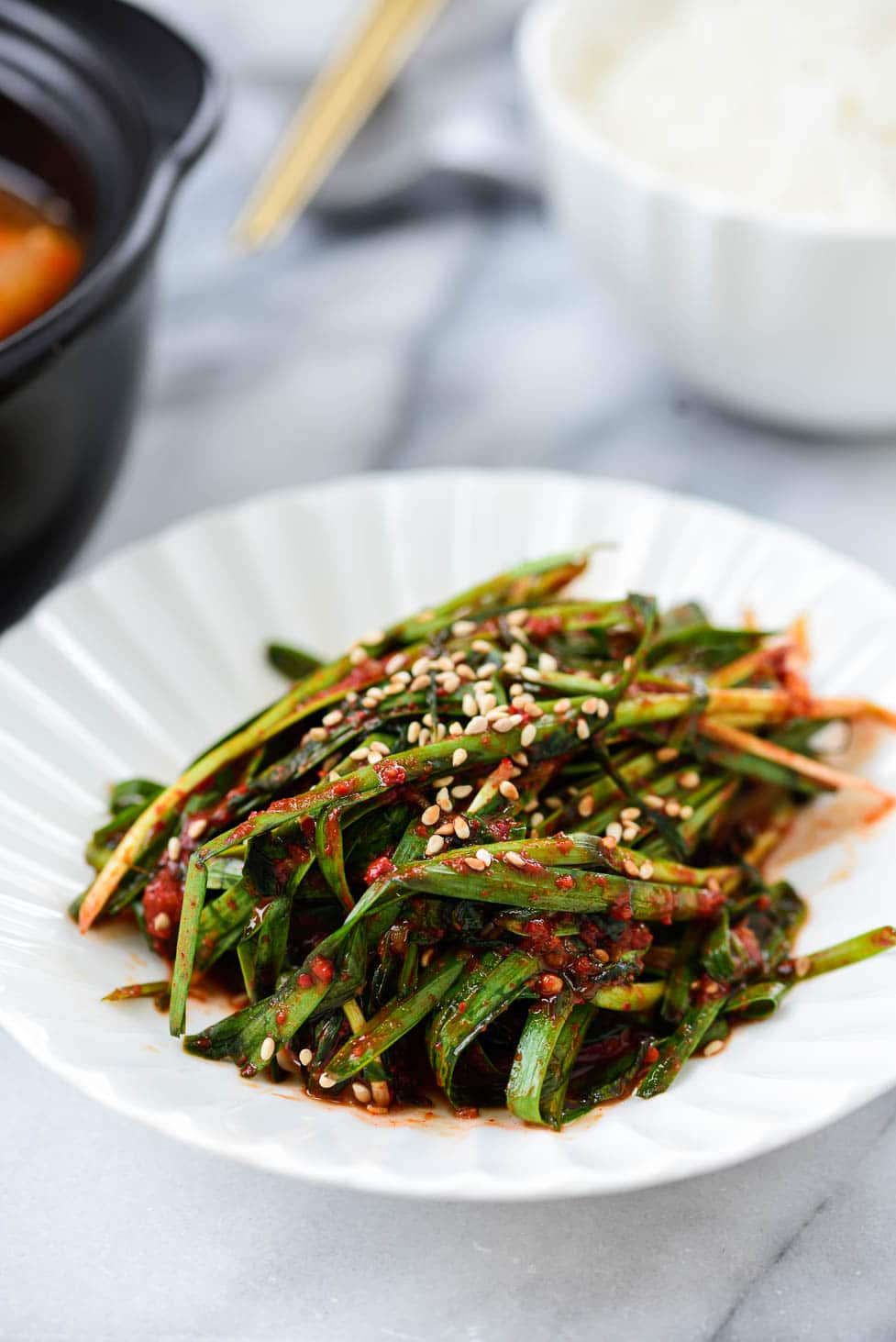
One of the easiest and fastest kimchi varieties to prepare. Tender garlic chives are simply tossed with the spicy seasoning and can be eaten immediately, offering a strong, aromatic garlic kick.
Recipe by: Korean Bapsang
8. Vegan Kimchi (No Fish Sauce)

This recipe proves you don’t need seafood products for a rich, umami flavor. It uses alternatives like mushroom powder or miso paste to deliver that deep, complex taste while remaining entirely plant-based.
Recipe by: Live Eat Learn
Conclusion
Kimchi is a culinary powerhouse, offering a magnificent blend of spicy, sour, and savory notes alongside incredible probiotic health benefits. This traditional Korean staple is proof that simple preservation techniques can lead to complex, profoundly delicious results. Whether you’re a beginner starting with a basic cabbage recipe or an adventurous home cook diving into radish or cucumber varieties, the process is deeply rewarding. Don’t be intimidated by fermentation—it’s a forgiving art! Grab your favorite vegetable, whip up that iconic seasoning paste, and start your own jar today. Your taste buds—and your gut—will thank you!


No Comments